Showing posts with label Caste. Show all posts

1.21.2007

Indian Left, Caste and the Dalits

By Bhupinder Singh

I asked Bhupinder Singh to write a guest post for me to complement my series on "The Oppression of Shudras/Dalits in India."
Part 1 was the introduction to the series, Parts 2, 3, and 4 were based on a Communist Party of India (Marxist) (CPM) report on the situation of Dalits in India and Parts 5 and 6 were written by me on a Hindu Liberationist Dalit issues.

I asked Bhupinder to write a blog on the situation of the left in India and the left's interactions with Dalit issues.

Bhupinder Singh is the author of a reader's words which is a very perceptive and excellent blog that mainly focuses on Indian affairs. He also is an editor for Blogbharti which "is an aggregator that brings to you the best of the Indian blogosphere."

The views and opinions expressed in this essay do not necessarily reflect those of the creator of this blog and are the sole responsibility of the author. Essays expressing opinions similar to and counter to those of the creator of this blog are strictly for diversity and to start thoughtful and meaningful discussion.

(Thanks to Jack for inviting to write this guest post)

The Indian Left has had a troubled association with the caste question.

The major reason, in case of the Left has been the over arching importance that Marxism has attached to class and class conciousness. This has been true of the Marxist Left which includes the original and later CPI, the CPM and even most of the Maoist formations. The socialist parties, specially under Ram Manohar Lohia and to a lesser extent Acharya Narendra Dev acknowledged the issue of caste since the fifties though from the backward caste, and not a Dalit perspective.

This post, however, focuses on the relationship between the Marxist Left and Dalit politics.

The class based approach of the Marxist Left gave little importance to caste, and even saw it as an impediment for growth of class consciousness. It's mass fronts consisted of the trade unions, the peasant associations, landless agricultural workers. Outside these class based fronts were those for women, students and the cultural wing (the famous Indian People's Theater Association).

No scope was seen for a Dalit or any other caste based association. In fact, when the DS4 of Kanshi Ram began to grow in the 1980s, it was seen, even by those cadres in the existing communist parties who came from a Dalit background, as reactionary and dangerous- since these threatened to break the unity of the class based fronts along casteist lines. At no time, till the Mandal Commission forced it to take a firm stand, did the Indian Left see centrality of the caste question in India.

Within the CPI and the CPM, the leadership has been, even till recently, primarily drawn from the Brahmins or the local dominant castes, with very few exceptions. Neither have these parties made any conscious attempt to bring cadre from the Dalit strata into leadership positions. Instead, they have recreated in their internal structures the imbalances of society.

This is not to deny the fact that they have also been relatively less susceptible to casteism, and many among their cadre continue to be within these parties because of the relative absence of casteism within these parties in comparison with others. This is especially so where Dalit movement has been weak or non- existent.

In comparison with some other countries, the Indian communists' participation and acceptance of parliamentary politics has been long and unquestionable. However the stress of political action also blunted the social and mass based actions that these parties should have been involved in.

This came out very clearly when, after the CPI(M) Congress in 1998, in reply to a question as to why the Left had failed to strike roots in Uttar Pradesh, the then party General Secretary H.S. Surjeet explained the reasons thus:
"There has been no social reform movement in the state".
This surely is a case of putting the cart before the horse, since for those on left of the political spectrum, reforms are only a part of a much more comprehensive radical agenda. The task of the left is to carry out changes that go beyond reforms and not wait for others to carry out the job. Surjeet's words raise an existential question for the CPI(M).

Another reason of this dichotomy between the Left and the Dalit movement has been that Dr. Ambedkar, by far the most towering leader of the Dalit movement if not its only one till the rise of Kanshi Ram, had been an opponent of Marxism. His focus remained the social upliftment of the Dalits and as a politician his sensibilities honed in English liberalism restricted his view. W.N. Kuber puts it thus:
In 1937, (Ambedkar) founded the Independent Labour Party, for sometime joined hands with the communists in the labor field but did not take consistent attitude and fight class battles. Though his community was downtrodden and landless and mostly wage- earners, still he could not make them class- conscious, because of the weakness in his inherent thinking. After the Poona Pact he tried to lead the working class, but failed and left the field forever, and chose to become the leader of his community.
(source: Ambedkar: A Critical Study by W.N. Kuber, 1973. Page 304)

His insistence on Buddhism as an alternative to Marxism also did not help to build bridges.
Buddhistic countries that have gone over to communism do not understand what communism is. Communism of the Russian type aims at bringing it about by a bloody revolution. The Buddhist communism brings it about by a bloodless revolution. The South East Asians should give a political form to Buddha's teaching.... Poverty cannot be an excuse for sacrificing human freedom.

(Source: Ambedkar, Life and Mission, page 487, quoted in Kuber).

To the over arching importance that Dr. Ambedkar gave to conversion as a salvation for the Dalits (then called the Depressed Classes), the scholarly CPI leader Hiren Mukerjee commented:
But merely by changing one's religion, one cannot bring a solution, particularly to the kind of problem that we have in our country. That is why I say the conversion to Buddhism was a gesture, a moral gesture, with certain conceptual connotations of its own. Buddhism is a magnificent religion, but somehow it was eased out of India. If by some miracle, Buddhism is brought back again, well and good. But things do not happen in real life like that.
(source: Hiren Mukerjee: Gandhi, Ambedkar and the Extirpation of Untouchability, page 46, quoted in Kuber)

If the Left parties are more sensitive to the caste question in recent years, it is because of the battle lines that were drawn in the aftermath of the Mandal Commission and also because of the political base that caste based parties, especially the Bahujan Samaj Party have been to create for themselves. While these made a dent in the following of all existing parties, the ones specially impacted were the Congress and the Left.

The second reason is the recognition of near absolute identity of the Dalits as one of the more oppressed sections in the country. Earlier observers, even among the most radicals ones, disdained this. Groomed in the modernist, Nehruvian framework in the backdrop of global appeal of Marxism, the caste factor was pushed under the carpet. It was even seen as an obstacle in establishing class-consciousness.

This has now changed, and rightly so. The communists and the Dalit movement share a complementary role. While the Dalit movement has articulated the social and political aspirations of the oppressed community, it has lacked a firm economic program, with the result that once power is gained (in Uttar Pradesh, for example), the lack of a class based theoretical perspective restricts it to either parliamentary politics or the perspective, often narrow, of a single leader. A Marxist understanding and placing the Dalit movement within a larger national and world wide struggle for emancipation complements this social and political approach.

It is not that this has not been attempted, it was there during the brief existence of the Dalit Panthers Movement in the 1970s before its disintegration. It was also there in the approach of Sharad Patil who broke away from the CPM to form the Satyashodak Communist Party in Maharastra in the 1980s.

Given the ossification in the dominant Left, however, this dialogue will have to be initiated by the cadre of the Dalit movement and independent Marxists.

12.30.2006

The Oppression of Shudras/Dalits in India, Part VI: A Hindu Liberationist Perspective

Finally, I've finished the series! The last time I posted a blog in this series was Part V on Oct. 28, 2006. I've been swamped with school and working for the newspaper, but I'm on break now until Jan. 24, 2007. So I'll also be working on my Mespotamia Burning series as well (which I also haven't done in a long time due to college and newspaper work).

‘So knowing this, and becoming calm, self controlled, quiet, patient and concentrated, he sees the self in himself, sees the self as all. Evil does not overcome him: he overcomes all evil. Evil does not burn him: he burns all evil. Without evil, without dust, free from doubt, he becomes Brāhmana. This is the world of Brahmā.’
-Brhadāranyaka Upanisad IV.5.23

The actual word, “Dalit,” means “crushed underfoot” or “broken into pieces.” The word comes from the 19th century activist Jotirao Govindrao Phule (1827-1890) who fought to remove the stigma of “untouchability” in India. The term also comes from the writings of the Dalit Panthers, a radical Dalit rights movement founded in 1972 in the state of Maharashtra.(1) And indeed, for Dalits, Sudras, and SC/ST peoples all over India this is the reality they still find themselves in today (by no fault of their own). For thousands of years Dalits and ST peoples had no right to property, were only allowed to eat food thrown away by higher caste Hindus, could not drink from town and village wells, weren’t allowed to enter Hindu temples, were denied access to education, performed menial jobs for upper caste Hindus, and were not allowed to live in the main towns and villages. They had to live on the outside, and since they couldn’t live in towns they had no right to ownership of property and thus “leading to [a] lack of access to all sources of economic mobility” which further caused “social exclusion and economic discrimination over the centuries.”(2)

Yet, still today, despite Indian independence in 1947 and a plethora of legislation outlawing caste discrimination against Dalits, SC/ST, and Other Backward Caste (OBC) peoples are just as thoroughly oppressed as they have been since before the founding of the modern state of India. Today, Dalits, SC/ST, and OBCs comprise about 52 percent of the Indian population,(3) and including lower caste Shudras, 77% of the population.(4) The reasons for the Dalits continued oppression are many, some of them religious, others economic, and still others political, with each category constantly melding into the next. Sagarika Ghose explains the situation of the Dalits quite well:
The dalit's pariah status derives its strength and justification from religious texts. In the Manusmriti, the dalit is described as "polluted," in the same way as a menstruating woman, a widow, or a person who has recently been bereaved is polluted. The dalit is "unclean" from birth. He violates, by his very existence, the brahminical obsession with hygiene...While the "untouchability" of the menstruating woman or the bereaved is temporary and he or she can escape the Untouchable condition after the period of "pollution" is past, the dalit can never escape his status: he is perpetually filthy.(5)
This “pariah status” thrust upon the Dalits by greater powers has caused much of the suffering we see today. In a census taken in 1991 it was found that 70% of all Dalit and SC households were landless, by the year 2000 it had increased to 75%,(6) this despite the fact that in 1990 the V. P. Singh government decided to implement the policies of the Mandal Commission Report of the Backward Classes Commission, a commission on how to deal with Dalits, SC/ST, and OBCs that came out with their report in 1980 (part of the report called for reserving 27% of all services and public sector undertakings and 27% of all higher education slots for students, to Dalits, SC/STs, and OBCs).(7) This landlessness and lack of property causes many problems for Dalits; because they have no property (that they own) they are often bonded-laborers and their children are forced to work as well, this causes many Dalits to be dependent on waste-land for grazing. A study in 1992 showed that in the state of Rajasthan, that as many as 89% of Dalits were involved in scavenging to make ends meat.(8) On top of land issues in 2000 49.06% of the working Dalit and SC population were agricultural workers with 32.69% being STs and only 19.66% being labeled as “other” which shows a “preponderance of dalits in agricultural labour.” Not only that but from 1991-2001 the number of agricultural workers increased. As for child labor, around 60 million children (reported) work in India, 40% of the labor force comes from Dalits and ST peoples.(9) Across all levels the situation for Dalits has been getting worse, not better, for all those statistics you can look at parts II and III on my blog series “The Oppression of Shudras/Dalits in India.” Now that the situation of Dalits in India is established (again, for more, see parts II and III) we can go on to what Hindus and Dalits have done since the late 19th century in fighting against caste discrimination and untouchability and how the Hindu religion can play a liberating role in the emancipation of Dalits instead of an oppressive role, by looking at the actions of Vivekananda, Gandhi, Ambedkar, and other Indian movements.

One of the early reformers of the Hindu religion (especially in relation to Dalits and women’s rights) in the late 19th and early 20th centuries was Narendranath Datta, also known as Vivekananda (1863-1902). Vivekananda was born into an upper caste Ksatriyas family in Bengal and was educated in a Western-style university where he learned about Western philosophy, Christianity, and Western sciences. Latter on he joined the Brahmo Samaj (Society of the Brahma) which was “dedicated to eliminating child marraige and illiteracy” and was “determined to spread education among women and the lower castes.” Latter on he became a disciple of Ramakrishna (who preached on the unity of all of the world religions). Instead of adhering to the Vedas in a dogmatic way Vivekananda stressed the humanistic side of the Vedas and thus became a prevailing force in preaching the Vedanta school of thought to the United States and England.(10) The Vedanta school is one of the six orthodox philosophies of Hinduism which based itself on the “speculative portion of late Vedic literature” and is chiefly concerned with the knowledge of Brahman and the unification of oneself with her or his atman to attain the truth.(11) In 1897 he founded the Ramakrishna Mission at the monastery of Belur Math which sat on the Ganges River near Calcutta which was dedicated to social work for many in India, including Dalits.(12) Yet despite his work he had done very little as a whole for the Dalits and for emancipating the Dalits from caste oppression. What Vivekananda showed us (as did the other Hindu reformers I mentioned in Part V of my blog) was that one did not have to dogmatically adhere to the Vedas to be Hindu. Vivekananda was just as Hindu as anyone from the BJP or the RSS today (even more so) and yet he was able to fuse diverse philosophical beliefs and to reject the uglier forms of Vedic Hinduism in order to help out those of the lower caste and of the female sex. Yet Vivekananda was of the upper castes and his view was very much influenced by Western white beliefs. Despite his reforms he still was afflicted with an upper caste and bourgeois mentality that hindered him from truly offering an alternative to Hindus and to truly uplifting the lower castes and Dalits from oppression.

After Vivekananda, one of the last reformers during a significant period of reform for the Hindu religion in the 19th century (for more see Part V), came Mohandas Karamchand Gandhi (1869-1948) and Bhimrao Ramji Ambedkar (1891-1956) whom, states Ghose, emerged “from the context created by these nineteenth-century movements as well as deeper traditions of anticaste protests by Buddhism, Jainism, and the Bhakti culuts.”(13)

As a child Gandhi grew up in a Vaisya caste household where his mother was a strict adherent to Vaisnavism, a Hindu sect which worships the god Vishnu and his incarnations, especially those of Rama and Krishna. His religious life was also influenced by stands of Jainism and ahimsa (non-injury to all living beings), so the tenets of non-violence and that everything in the universe is eternal surrounding the young Gandhi all the time,(14) which helps us better understand his religious and moral philosophy latter in his life.

After growing up in India and being educated in England Gandhi’s first boat of fighting for those who were oppressed was during his time in South Africa, which won him acclaim in India and England. He studied the deplorable conditions Indians lived in and founded the Natal Indian Congress in 1894 which took up Indian grievances to South Africa and England (since South Africa was a colony of England). Yet despite all this Gandhi still had many bourgeois tendencies that he would carry with him throughout his life (all though they would be morphed into more high-caste Hindu tendencies), in 1899 Gandhi argued all Indians that it was their duty as citizens under the English crown to defend South Africa during the Boer War. Yet after the war Gandhi continued to fight for the rights of Indians and took up more confrontational non-violent mass actions.(15) These battle in South Africa further more shaped his thinking just as his mother’s religious devotions had shaped his thinking in his youth. With this we will look at Gandhi’s actions relating to the Dalits and what he did (and didn’t do) for them and how, despite the fact that he was a very conservative and strictly observant Hindu (with upper-caste tendencies), he fought against the stigma of untouchability and urged reform all across India to help out the Dalits.

By autumn of 1920 Gandhi had become a very important figure in Indian politics and he had even managed to help refashion the Indian National Congress (founded in 1885) into a very formidable political tool for the fight against British rule, having the Congress Party branch out all over India by entrenching itself in Indians small towns and villages. In 1932, during a bout in prison, Gandhi started a fast (which his mother had done many times in his youth) to protest the British government’s move to segregate the Dalits by assigning them separate elections in the new constitution of India. His fast caused upheaval in the country and worked, thus starting Gandhi’s actions to remove the stigma of untouchability from the Dalits within Hinduism and the state of India. In 1934 Gandhi had resigned from his position in the Congress Party and also resigned as a member. Instead he wanted to build up national unity “from the bottom up” by setting up programs in rural India (85% of the population back than was rural) and educating around the countryside through himself and others. A part of this building “from the bottom up” included fighting against untouchability.(16)

Gandhi’s fight for Dalits was very much steeped in Hinduism. Instead of Hinduism being a barrier for him (or an excuse) in helping Dalits and coming in contact with them it was instead used as a jumping off point, a platform, for trying to remove the stigma of untouchability and it was something he used to the fullest. After resigning from the Congress Party his new mission, and revolution, was not necessarily home-rule for Indians by Indians (but he did fight against British rule) but was an “exercise in the autonomy, the dignity, and the freedom of the ‘non-subject’ by being neither colonizer nor colonized, neither oppressor nor oppressed, neither hawk nor dove...”(17) In the Brhadāranyaka Upanisad IV.5.23, which I quote above, it states that if one lives a righteous Hindu life one can become Brahmā, unified with Brahman. This was essentially how Gandhi saw the Dalit question. Because Dalits (or harijan as he called them, that is “Children of God”) where Hindu and because they were fully human and could indeed become unified with Brahman just as the Brahman caste could become unified, than one should treat Dalits with respect, and old traditions, such as untouchability, were misguided and hurtful. Gandhi said that “[t]he taint of Untouchability is an intolerable burden on Hinduism. Let us not deny God by denying to a fifth of our race the right of association and on equal footing.” The culmination of centuries of anti-Brahmin thought in Hinduism and different Hindu sects (such as Jainism) essentially meet each other in the figure of Gandhi (for more on this see Part V). Unlike Vivekananda he had actively tackled the question of the Dalits and had done much to try and reform Hindu’s in their thinking. Yet, as we can see today, very little has changed for the Dalit and her or his situation. Yet Gandhi was very much effected by strands of upper-caste conservative Hinduism, even though he showed us that one can still practice such strands without oppressing Dalits and other ST/SCs and OBCs. This is where Ambedkar comes into play.

Bhimrao Ramji Ambedkar, born into a Dalit Mahar family in the western Indian state of Maharashtra, was a contemporary of Gandhi’s, and, like Gandhi, campaigned for the rights of Dalits all across India. Except his was a much more involved and militant campaign seeking the emancipation of all Dalits across India and one that scourged upper-caste Hindu practices and any semblance of elitist thinking and help from those who carried Brahminic tendencies. Unlike Gandhi who had been born into a well off family (Gandhi’s father served as a dewan, or chief minister, in Porbandar and Rajkot) Ambedkar was a Dalit and grew up being humiliated by his fellow school mates whom where high-caste. As a Mahar, Ambedkar’s duties traditionally were cutting wood for cremation, getting rid of dead cattle, washing wells, delivering messages over long distances, and other menial and degrading tasks. Also, all Mahar’s were to live in segregated areas outside of the villages and towns that they served.(18) Ambedkar was able to study abroad in Great Britain, Germany, and the United States, where he meet such thinkers as John Dewey, one of the original founders of the school of pragmatism and a pioneer in functional psychology. His education abroad (which was due to a scholarship given to him by the gaekwar, or ruler, of Baroda)(19) greatly influenced his thinking, just as Gandhi’s education abroad. Yet his education abroad wasn’t the only thing that influenced his thinking, it was also his life as a Dalit, being treated as dirt by other Hindus, as well as a history of “powerful 19th century anti-caste movements in his own province” and “the histories of numerous heterodox, anti-Vedic, materialist sects/schools that have always existed on the fringes of Hinduism.”(20) (For more on this see Part V).

Originally Ambedkar was optimistic about the political and economic emancipation of his peoples, the Dalits, and that they would eventually be integrated into mainstream Indian society. Soon though he would come to realize that this was not the case, and while originally religion didn’t play an initial factor in his political struggles it soon would loom large. After intense struggles with getting rights to access drinking water from village wells, the right to enter temples, and the a struggle in voting rights in 1932 in where he held intense debates with Gandhi who opposed separate voting rights for Dalits, he quickly came to realize, in his mind, that the struggle for Dalit rights was essentially a struggle that was not only political and economic, but also had to do with the ingrained bigotry within the Hindu caste-system itself. He also became disillusioned with the Congress Party, which he saw as filled with upper-caste nationalism that cared more for home rule than for the emancipation of the Dalits. This led him to declare in 1935, “I was born a Hindu, but I will not die a Hindu.(21)

One large weakness that Gandhi had (all though it didn’t undermine his belief in Hinduism and it didn’t make his belief in Hinduism wrong) was that while he was indeed campaigning for the removal of untouchability from Dalits he was, as the same time, publically lauding the caste system as being divinely sanctioned and a source that brought harmony and community to Indian society, as supposed to the capitalistic and individualistic system of the West.(22) Yet what Ambedkar saw and what Gandhi saw, were to different things. Because Ambedkar lived the life of a Dalit he saw first hand how the opposite was actually the case. The caste system couldn’t be divinely sanctioned because it brought so much trauma and pain and suffering to so many people, this was something Ambedkar had experienced first hand while Gandhi, because of his caste privilege and economic privilege as a youth, never experienced. Essentially Gandhi was blind to the deep and inherent flaw in his statements lauding the caste system. If anything, the caste system only brought about social harmony through the oppression of Dalits, SC/STs, and OBCs, it was through their pain that society was able to “gain.” Because of this, Ambedkar was one of Gandhi’s harshest critiques. “Examine the Gandhian attitude to strikes,” stated Ambedkar, “the Gandhian reverence for caste and the Gandhian doctrine of Trusteeship of the rich...Gandhism is the philosophy of the well-to-do and leisured class.”(23) Ambedkar was able to see aspects of the Gandhian movement that others couldn’t (or refused to) see because of their caste background. What Ambedkar saw was a movement that was conservative, upper-caste, and bourgeois. Because Gandhi was upper-caste and because most of his leadership was upper-caste Ambedkar wanted nothing to do with Gandhi, his movement, or the upper-caste dominated Congress Party. Not that they would want anything to do with Ambedkar either since he argued that political democracy was meaningless without radical social transformation and a repudiation of the caste system.(24) Ambedkar stated that the “‘monster of caste’ crosses everyone’s path alike, every which way you may turn: ‘you cannot have political reform, you cannot have economic reform, unless you kill the monster [of caste].’”(25) Ghose states, “For Gandhi, Hinduism and the caste system were not negotiable. But Ambedkar rejected both Hinduism and the caste system as well as the claims of any upper caste to represent the dalits. For Gandhi, Untouchability was an evil within Hinduism, to be reformed by Hindus. For Ambedkar, upper-caste leadership of dalits was abhorrent.”(26) In his 1936 book, Annihilation of Caste, Ambedkar stated that upper-caste Hindus and supporters of caste did not deny Dalits a way of life because they were “inhuman or wrong headed...but because they are deeply religious. The myriad hierarchies and taboos of caste have the sanctity of the shastras [scriptures]...people will not change their conduct unless they have ceased to believe in the sanctity of the shastras.”(27) So the real enemy is not the people observing caste but the shastras that teach people to observe the caste system.

With Gandhi, despite his flaws, we saw a devout and observant Hindu fighting to alleviate the Dalits of their plight. With Ambedkar we saw a Dalit militantly, and without remorse, completely take on the system of caste at full speed in order to emancipate his people by any means necessary. In fact, on October 14, 1956 Ambedkar, along with 200,000 or so of his followers, renounced Hinduism and converted to Buddhism in Nagpur, India in a final repudiation of Hinduism and of the caste system.(28)

Because of Gandhi and Ambedkar the constitution of India outlawed discrimination based on caste and also created “reservations” (affirmative action policies).(29) Yet despite the legal emancipation of Dalits, SC/STs, and OBCs, Dalits are still harshly discriminated against. Gail Omvedt wrote in The Hindu that:
The reservation system was instituted not so much on the basis of the Constitution as on that of the decades-old elite resistance to restructuring public employment. It serves several purposes. It allows the elite to maintain the facade of a generous patron of Dalits while continuing to deprive them of mas-level education and access to resources. It provides a process to absorb some of their brightest members into a system still based more on extortion and corruption than true public service. Finally, it continues to block true representation of the majority of the nation’s population.”(30)
Yet, even with these factors Dalits are still fighting as they have been since the death of Ambedkar. In 1972 emerged the Dalit Panthers (borrowing their name from the American Black Panther Party for Self Defense) which was made up mostly of militant poets and writers seeking full emancipation of Dalits in India. Yet within a few years the movement splintered and became coopted by the government elite as its members joined several government committees and panels. In 1984 the Bahujan Samaj Party (BSP) was formed after Dalit leaders Kanshi Ram and Mayawati Kumari broke away from BAMCEF (All-India Backward and Minority Employees Federation, set up as a “talent bank” for Dalits in 1976). The BSP was set up to represent Dalits, SC/STs, and OBCs in the government of India. Yet despite their rise in power in key states such as Uttar Pradesh it has fromed governments with and has allied itself with the Bharatiya Janata Party (BJP), the utter embodiment of conservative caste worshiping Hindu nationalism, especially when it attacks Muslims, Dalits, and others whom are not high-caste Hindus. Ghose explains that their hasn’t been able to be a solid Dalit and “society of the backward” movement because of the nature of the caste system (because of the many diverse states Dalits from different parts of India can’t even speak to each other due to language barriers) and “because of the nature of agrarian relations, which pits backward castes against each other and thus divides the society of the backward.” Also, “[s]ince brahmins have become urbanized, it is the intermediate backward castes (those just above the ‘pollution line’) who have become owners of the land on which the dalit is a laborer. This has led several dalit intellectuals to argue that the greater enemy of the dalit is no longer the brahmin but the intermediate castes,”(31) which I’m sure delights many of the Brahmin caste.

Yet despite all of this we have seen in Parts V and VI how Hinduism, instead of being a tool for oppression, can instead be used as a tool for liberation. Instead of taking the Vedas and other religious texts at their word many Hindus have been able to reject certain aspects of sacred Hindu literature that have Brahminic supremacist tendencies, and have still be able to hold onto their core Hindu beliefs, but without harming themselves or others. Also, we have seen, especially in the example of Ambedkar, how Dalits have taken their destiny into their own hands in order to liberate themselves. We see that Dalits can see certain aspects of so called “reformed” Hinduism that others can’t, mainly that many of these “reformed” Hindus were actually still perpetuating high-caste tendencies and were in effect, talking down to Dalits (such as Gandhi’s term “harijan,” which Ambedkar and other Dalits found utterly repugnant). Because of this, Dalits are the ones who are to liberate themselves and no one else, anyone other than a Dalit actively trying to lead Dalits is essentially perpetuating their upper-caste privilege and in turn is doing more harm than good. No one can claim (without being ignorant to history, caste oppression, and utterly arrogant) to be a leader of Dalits except a Dalit. Hindu’s can, and should, fight for Dalit rights. By saying that Dalit’s are the only ones who can liberate themselves however doesn’t mean that upper-caste Hindu’s are off the hook. In fact, the opposite is true. Because many upper-caste Hindu’s enjoy benefits in a society that is based on caste oppression and the exploitation of Sudras, Dalits, SC/STs, and OBCs, they must critically look at themselves and at the caste system in place that keeps them propped up in a life of privilege. Upper-caste Hindus (who don’t need to loose their religious beliefs, all though for some that may be impossible, and others, at no fault of their own, may find losing their belief to be a benefit, and I don’t fault them for it) must actively help out Dalits by speaking to others within society about the plight of the Dalits and by speaking about caste privilege and its necessary destruction. I cannot know where the struggle for Dalit rights will head since I am an outsider but I do know that as Dalits take charge (as they have for many decades now) and as fellow Hindus continue to use their religion in a liberating manner (and to attack those aspects of Hinduism that are oppressive) there can be a strong liberating voice that will demand, and get, revolutionary change in the system. As an outsider I will wait and see how this continues to unfold.

Notes
1. Ghose, Sagarika. “The Dalit in India.” Social Research 70, no. 1 (Spring 2003): 85.
2. Communist Party of India (Marxist). “Resolution Adopted At The All India Convention On
Problems of Dalits” (New Delhi: February 22, 2006), 1. See also part II of this series in my blog post http://mustardkernal.blogspot.com/2006/09/opression-of-shudras-in-india-part-ii.html.
3. Ghose, “The Dalit in India,” 84.
4. See http://mustardkernal.blogspot.com/2006/08/oppression-of-shudras-in-india-marxist.html.
5.Ghose, “The Dalit in India,” 84.
6. Communist Party India (Marxist), “Problems of Dalits,” 5.
7. Ghose, “The Dalit in India,” 97-98.
8. Grey, Mary. “Dalit Women and the Struggle for Justice in a World of Global Capitalism.”
Feminist Theology: The Journal of Britain & Ireland School of Feminist Theology 14, no. 1
(Sept. 2005): 135-136.
9. Communist Party India (Marxist), “Problems of Dalits,” 5.
10. Encyclopedia Britannica, 2006, “Vivekananda,” available at Encyclopedia Britannica Online
http://www.search.eb.com/eb/article-9075594.
11. Funk & Wagnalls New Encyclopedia. “Vedanta,” available at FirstSearch
http://firstsearch.oclc.org.ezproxy (accessed Nov. 25, 2006).
12. Encyclopedia Britannica, “Vivekananda.”
13. Ghose, “The Dalit in India,” 92.
14. Encyclopedia Britannica, “Gandhi, Mohandas Karamchand,” available at Encyclopedia
Britannica Online http://www.search.eb.com/eb/article-9109421.
15. Ibid., http://www.search.eb.com/eb/article-22634.
16. Ibid., http://www.search.eb.com/eb/article-22636.
17. Prakash, Madhu Suri. “Remaking Our Soil: Gandhi’s Revolution for the 21st Century.”
Encounter 15, no. 2 (Summer 2002): 23-24.
18. Meera, Nanda. “A ‘Broken People’ Defend Science: Reconstructing the Deweyan Buddha of
India’s Dalits.” Social Epistemology 15, no. 4 (Oct. 2001): 348.
19. Encyclopedia Britannica, “Ambedkar, Bhimrao Ramji,” available at Encyclopedia Britannica
Online http://www.search.eb.com/eb/article-9006040.
20. Meera, “A ‘Broken People’ Defend Science,” 336-337.
21. Ibid., 349.
22. Ibid., 350.
23. Ghose, “The Dalit in India,” 94.
24. Ibid., 95.
25. Meera, “A ‘Broken People’ Defend Science,” 351.
26. Ghose, “The Dalit in India,” 96.
27. Ambedkar, B. R. Annihilation of Caste (Jalandhar: Bhim Patrika Publications, 1936), 111.
28. Encyclopedia Britannica, “Ambedkar, Bhimrao Ramji,”; and Meera, “A ‘Broken People’
Defend Science,” 348.
29. Ghose, “The Dalit in India,” 96.
30. Omvedt, Gail. “Caste, Race and Sociologists.” The Hindu, 14 March 2001.
31. Ghose, “The Dalit in India,” 100-101.

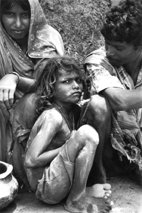
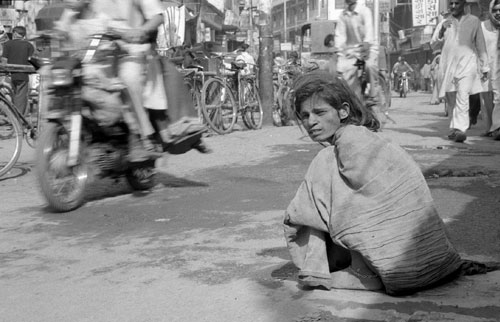
Image From:
News Today

11.07.2006

B. R. Ambedkar: Reconstructing the World

By Owen M. Lynch

This was a book review of Reconstructing the World: B. R. Ambedkar and Buddhism in India that appeared in The Journal of Asian Studies 64, no. 2 (May 2005): 497-499. I’m posting it since it’s relevant to my blog series “The Oppression of Shudras/Dalits in India: A Marxist and Hindu Liberationist Perspective.” This should explain better to those readers out there who are curious but who don’t know who Dr. Bhimrao Ramji Ambedkar is.

The views and opinions expressed in this essay do not necessarily reflect those of the creator of this blog and are the sole responsibility of the author. Essays expressing opinions similar to and counter to those of the creator of this blog are strictly for diversity and to start thoughtful and meaningful discussion.

Reconstructing the World: B. R. Ambedkar and Buddhism in India. Edited by Surendra Jondhale and Johannes Beltz. New Delhi: Oxford University Press, 2004.viii, 316 pp. Rs 995 (cloth).

Dr. B. R. Ambedkar, a Dalit (ex-Untouchable) and major architect of India's constitution, was arguably India's greatest modern intellectual. His social and political writings and ideas have become more influential today than when they were first written. Just before his 1956 death, Ambedkar completed his own interpretation of Buddhism, The Buddha and His Dhamma (Bombay: Siddharth Publication, 4th ed. 1991), "the" sacred book for many of his followers today. Reconstructing the World: B. R. Ambedkar and Buddhism in India's fifteen authors-too many for separate mention in eight hundred words-make a major contribution insofar as they synthesize, contextualize, and explain Ambedkar's interpretation of Buddhism and thereby demolish some of the many misunderstandings and misrepresentations of his thought.

A reader might read Yashwant Sumant's article first because it best summarizes Ambedkar's thoughts on religion and Buddhism. Sumant demonstrates how Ambedkar, a rationalist, concluded that so-called popular religions surrender reason to transcendental gods and dogmas. They thereby separate themselves from morality, as does Hinduism's rejection of liberty, equality, and freedom, and its unjust treatment of Dalits through its practice of graded inequality. Contrariwise, Ambedkar's rationalist Buddhism is a this-worldly social praxis, a morality rejecting all social barriers. For these reasons, as Johannes Beltz's article shows, many Dalits today reject Hinduism and convert to Buddhism.

Ambedkar's Buddhism is often pejoratively called "neo-Buddhism." That implies that Dalit Buddhists are still Hindus, a judgment that they reject in their own sense of identity (Beltz, p. 261). "Neo-Buddhism" also implies departure from traditional Buddhism because it rejects the four noble truths as pessimistic and denying hope to humans rather than providing motivation to change their everyday life's conditions through Buddhist social praxis. Pradeep Gokhale's article, however, responds that even if Ambedkar's Buddhism is a reconstruction of traditional Buddhism, "it may or may not be so for original Buddhism" (p. 124). Moreover, Christopher Queen's article convincingly argues that activist Buddhists in Southeast Asia and elsewhere have used mass media, public relations, and legislation to pursue this-worldly change, yet they are not labeled with the prefix "neo." Rather, Queen demonstrates that Ambedkar's transformations retain "the central elements of the Buddhist vision" (p. 146). More telling are Adèle Fiske and Christoph Emmerich, who, following Richard Gombrich, argue that "orthodoxy is by far the lesser issue in the history of ruptures within the Buddhist tradition compared to the role of orthopraxy. ... If Ambedkar departed from any Buddhist tradition, it was on the grounds of a challenge to orthopraxy through his own ideas of political and social practice" (p. 112).

Gary Tartakov's article notes that Ambedkar called his Buddhism Navayana (p. 152). Navayana is not "neo"; it is a fourth vehicle (yana) among Buddhism's traditional three. Ambedkar's Buddhism, as many of the book's authors argue, is based on a deep study of Buddhist texts and scholarly writings about them, just as The Buddha and His Dhamma is organized around a profound understanding of events in the Buddha's life, as Eleanor Zelliot's article notes. Many of the book's authors argue that Ambedkar did not intend Navayâna for Dalits only. He meant it as a universal message for all humanity. Its goal is individual and collective emancipation from nonrational thought, economic exploitation, and unjust social difference.

A keyword in Ambedkar's Buddhist discourse is "justice," meaning liberty, equality, and fraternity. Some, therefore, say that Navayâna is mostly repackaged Western liberal thought. Yet, Ambedkar said that he had learned everything about those words' meaning from the Buddha. Eugenia Yurolova's article, like Olivier Herrenschmidt's, adverts to Ambedkar's statement that equality has no value without liberty and fraternity, that the three must coexist and do so only by following the Budhha's way. Ambedkar, Yurolova says, felt that democracy was the best form of government but not in its Western form, in which liberty had swallowed equality, producing class difference and a market ideologically supported by social Darwinism (pp. 86-92). In this reviewer's opinion, Ambedkar's views here resonate loudly in contemporary India's struggle between meritocracy (liberty) and reservations (equality and freedom).

Reconstructing the World's second major contribution is its introducing readers to late nineteenth- and early twentieth-century Buddhist movements among Dalits other than Ambedkar's Buddhism. G. Aloysius's article succinctly illuminates Pandit Iyothee Thass's 1898 establishment in Tamilnadu of Sakya, later the South Indian Buddhist movement. While similar to Ambedkar's Buddhism in ideas and goals, it tantalizingly differed in one respect. Sakya had an earthbound transcendent God: "[A]Il those men and women who followed the path of righteousness and wisdom and lived a life of total selflessness, and thus through their own character, conduct and life-contribution had become indispensable to and immortal in the lives of successive generations" (p. 212).

Maren Bellwinkel's revealing article narrates historical Buddhist influences in Uttar Pradesh. In Kanpur, Archarya Ishvardatt Medharthi (1900-1971) tried to reconcile Buddhism with the sant tradition, while in Lucknow, Bodhanand Mahastavir (1874-1952) established a Buddhist temple and advocated for Dalits. His followers founded the press influential among Dalits, Bahujan Kalyan Prakashan, and actively participated in Ambedkar's Republican Party of India. Also around 1937, two Sri Lankan-trained but Western-born monks made a missionary visit to Kanpur. Finally, in 1981 Kanpur's newly formed Dalit Panthers organized its first mass conversion to Ambedkar's Buddhism.

Reconstructing the World offers stimulating and provocative analyses of Ambedkar's religious legacy: Buddhism's contemporary revival in India and its universal relevance for humanity.

Copyright Association for Asian Studies, Inc. May 2005

10.28.2006

The Oppression of Shudras/Dalits in India, Part V: A Hindu Liberationist Perspective


It’s all one skin and bone,
one piss and shit,
one blood, one meat.
From one drop, a universe.
Who’s Brahmin? Who’s Shudra?
-Kabir (15th century Bhakti saint)

Today there are around 200-250 million Dalits in India with 75-80% of them below the poverty line(1) and backward castes as a whole (Dalits, tribes, etc.) forming close to 52% of the population of India.(2) Needless to say caste oppression in India is probably the greatest injustice still existing in, and haunting, that society today. I come to this subject as an outsider (in every sense of the word, I’m a white Christian American male!) looking in not knowing the full intricacies that effect lower caste and non-caste Indians, nor do I pretend to know or try and talk about subjects that are outside of my realm of knowledge. I’m writing this essay because of a Reuters article that came out in August and that appeared in Al Jazeera which perked my interest in the subject of caste. Although I may be critiquing caste in Indian society I do not mean to degrade the great and ancient religious tradition that is Hinduism nor do I mean to impose my religious beliefs (I follow the school of thought of Liberation Theology in the Christian tradition) onto those who follow the Hindu tradition because I recognize that many Christians have done this in the name of liberating people from the horrors of caste oppression. I’m not so narrow minded and simple to think that Christianity is the answer to caste oppression in India, in fact, I recognize that even in Christian communities and churches priests and worshipers still follow the caste system and still oppress people on the basis of caste, even though they claim to have liberated people from the rigid structures of caste.(3) In order to overcome the evils of caste all Indians have to do is to just look at their own traditions (not to Christianity) in order to see that there are liberating schools of thought within those traditions, and this is indeed what many have done over the centuries, whether it was Swaminarayan (1781-1830) who got rid of caste in his community of followers, Vivekananda (1863-1902) who preached that the downtrodden needed to be uplifted and that the caste distinction needed to be rid of, or the great B. R. Ambedkar (1891-1956), the militant Dalit who ferociously fought against all forms of caste discrimination and latter converted to Buddhism (with 200,000 of his followers) claiming that Hinduism was so corrupt and oppressive that he could no longer consider himself Hindu. All three Indians, and many many more, fought against the caste system and/or caste distinction (all though Swaminarayan and Vivekananda were from the Brahmin caste with only Ambedkar being outside of the caste system, a Dalit), while I won’t take up the line that Ambedkar did (that Hinduism was hopelessly corrupt and evil) I will be critiquing that aspect of Hinduism. Again, as I’ve said above, I am an outsider looking in, a non-Hindu, so because of this my criticisms will not be as harsh as are my criticisms of Christianity because I don’t want to be mistaken as criticizing the Hindu religion as a whole, which is not at all my intention.

The caste system is as old as the Hindu religion itself, in fact, it even predates Hinduism by some centuries. One important thing to know about the caste system is that it was brought into the Indus Valley from the outside by a tribe of semi-nomadic people called the Aryans (the “Noble Ones”), who originally inhabited the steppe country of southern Russia and Central Asia and entered India, through the Indus Valley, around the year 1500 BCE.(4) The Aryans had a linear sense of time and had a structured caste system with three sets of castes (warrior caste on top, followed by a priestly caste, and then everyone else) and a plethora of mostly male gods, the language that the Aryans spoke was Sanskrit which latter became the basis for Hindi. When the Aryans invaded the Indus Valley the people of the Indus Valley had a religion with no caste system, a circular sense of time (hence the Hindu concept of reincarnation, etc.), and a pantheon of female goddesses.(5) The fact that the outsider Aryans introduced India to the caste system and was a warrior-centered culture that had a reverence for male gods is one of the reasons why scholars, such as Kalpana Kannabiran argue that “patriarchy is in fact the basis of the caste system and that the patterns of hierarchy, power and authority which characterise the caste system are derived from earlier forms of gender-based oppression.”(6) When the Aryans first invaded the Indus Valley they called the Indus Valley people (Indians) Dasa (Sanskrit for dark-skinned) and the three-tier caste system was morphed into a four-tier caste system called the Four Varnas (which means color); Brahmins, the priestly class were now on the top, Ksatriyas, the warrior class were now below the priests, then their was the Vaishyas, skilled labor, and the Sudras, unskilled labor. Outside of the caste system were the non-Vedic peoples and the Dalits (the untouchables). Originally the lighter one’s skin color was the higher up in the caste system one was (with the Aryans obviously being at the top of the system) and the higher up in the caste system one was the more “pure” that person was (purity was of a huge concern of the Indus Valley people with many ritual and private baths having been excavated).(7) The majority of the people in the Indus Valley fell within the lower castes which can be seen today since 77% of Indians comprise these lower castes (as well as Dalits, scheduled castes/scheduled tribes [SC/ST], etc.).(8) What this mini-history lesson shows us was that the concept of caste is a concept that was brought into India by outside forces (the patriarchical and warrior culture of the Aryans) which then incorporated itself into the civilization of the Indus Valley people through the Vedas (specifically the Rg Veda). The Aryans and Brahmins needed a system to keep themselves on top and the majority of the dark-skinned Indus Valley people at the bottom, the caste system was the perfect way to do this, and in fact this had been the case until around 500 BCE when the traditions of the Vedas and the Brahmins began to be attacked by Hindu ascetics.(9)

From around 600 BCE to 200 BCE there was an incredible Vedic development in the Hindu tradition (a philosophic development) which can be described as the “democratization of Hinduism.” Out of this philosophic development came the Upanisads (upanisad implies “sitting at the feet of the teacher,” Upa=down, Ni=near, and Sad=sit).(10) The Upanisads were focused on attaining the mystical knowledge that would free a person from “re-death” or punarmrtyu. The Brhadāranyaka Upanisad placed emphasis on the knowledge of the cosmic connection underlying ritual. “When the doctrine of the identity of atman (the Self) and brahman was established in the Upanishads, the true knowledge of the Self and the realization of this identity...substituted the ritual method.”(11) Asceticism started becoming more widespread (which was one the factors leading to the creation of the latter Upanisads) in reaction to the rigid doctrines of the Brahmin and of the Vedas. What’s important to note as that even though these ascetics were critical of the Vedas and scathing in their critiques of the Brahmins they were still very much Hindu in nature (in fact, they probably didn’t consider themselves anything else, all though the term Hindu wasn’t around then) and their philosophical teachings and thought derived from the Vedas. These ascetics denied that only Brahmins could receive bliss and escape reincarnation and stated that through giving up the world and all desires anyone, whether Dalit or Vaishya, could attain psychic security, or rather, liberation through the attainment of unification with Brahman. Out of reaction to this the Brhamins devised a doctrine called the four asramas (abodes) which dived the life of the “twice born” into four stages” which would keep asceticism in check by confining it to middle-aged males.(12)

On top of these ascetics came leaders who led offshoots of Hinduism and breakaway sects such as Siddhartha Gautama (the Buddha) and Vardhamana (Mahavira, the great teacher of Jainism). These two leaders rejected not only the pleasures of the world, but more importantly, they rejected the claims of the Brahmins and the ritualistic Brahminic schools who claimed authority and superiority over other Hindus and Indians by claiming to be pure and to have the right to perform traditional rituals and sacrifices, as well as having the rights to interpret their meanings. While the Buddha rejected Hinduism (as well as religion) all together, Mahavira kept to the central aspects of Hinduism while abandoning the rituals that allowed the Brahmins to dominate all aspects of life. Mahavira stated that through one’s own efforts one could attain liberation and freedom from rebirth,(13) short of the Buddha, this was one of the most complete rejections of the Brahmins (and in turn their belief in ritual purity and caste) that anyone could have ever articulated.

All of this now brings us to today and to the subject of the liberation of Dalits and to the subject of my final blog in this series, a Hindu Liberationist perspective on the plight of Dalits and of their liberation from caste oppression. What disturbed me about the student protests against the further admission of lower caste and SC/ST students was that these high caste students had the wrong premise that the oppression of lower caste and SC/ST peoples was the “correct” form of Hinduism and the only form that should be practiced (all though I do recognize that some of these students could have been playing the “caste card,” claiming caste privilege in order to protect their privilege in society). Yet we have seen in the ancient history of Hinduism that caste was an outside concept placed upon the Indus Valley people by an outside tribe of semi-nomadic pastoralists, this shows us that the concept of caste didn’t grow “organically” from Indian soil but was imposed from the outside, and hence, the shedding of caste ideology and caste oppression would in a sense mean the shedding of outside Aryan domination against the Indian peoples, of course many high caste Indians still adhere to their Aryan roots and view their Brahmin status as a source of pride, not something to overcome in order to help out their lower caste and Dalit sisters and brothers. Despite the seemingly set in stone concepts of caste in the Rg Veda many Hindus over the preceding centuries fought back against the Brahminic elite and questioned the writings of the Vedas, especially the writings on ritualistic purity (a major concept in caste ideology) and on the “privileges” of the Brahmin caste. Whether it was the radical Siddhartha Gautama, who renounced Hinduism, or Vardhamana, who used acetic concepts of Hindu thought to criticize the present day establishment, thoughtful Hindus and the ever evolving Hindu religion never laid down and accepted the perverse policies of the Brahmin and their constant quest for power. Because of this we can see that Hinduism was never a monolithic religion that accepted the Vedas sayings on caste and ritual as blindly as present day Hindu nationalist BJP (Bharatiya Janata Party) and RSS (Rashtriya Svayamsevak Sangh) supporters would like us to think. History has shown us that a thoughtful and pious Hindu can be one who rejects certain ideas of Vedic thought that are oppressive and evil and history has also shown us within the Hindu tradition there has always been an ever evolving struggle for freedom against the Brahminic caste in the realm of the physical and the realm of the spiritual, such as reclaiming concepts of freedom from rebirth and attaining liberation by being joined with Brahmin. With this in mind I will now actually tackle (in part VI, the final part, of this series) the problems of the caste system and the oppressions Dalits have faced over the centuries (especially the 20th century and now) and how Dalits will be the ones to actually bring about change in this present day situation and how Dalits are the only ones to bring about their own salvation (not from outside help from people such as Gandhi or someone like myself) and how the Hindu religion plays a role in this, and how it can play a liberating role instead of the role of oppressor.


Endnotes

1. Grey, Mary, “Dalit Women and the Struggle for Justice in a World of Global Capitalism,” The
Journal of Britain & Ireland School of Feminist Theology 14, no. 1 (Sept. 2005): 129.
2. Ghose, Sagarika, “The Dalit in India,” Social Research 70, no. 1 (Spring 2003): 84.
3. Mary, “Dalit Women,” 144.
4. Encyclopedia Britannica, 2006, “Hinduism,” available at Encyclopedia Britannica Online
http://www.search.eb.com/eb/article-8972 (accessed Oct. 28, 2006).
5. Kyle Dupen, Philosophy 502 World Religions Lecture (San Francisco State University: San
Francisco, CA) 26 Aug. 2005; Encyclopedia Britannica, 2006, “Hinduism,” available at
Encyclopedia Britannica Online http://www.search.eb.com/eb/article-8981 (accessed Oct. 28,
2006).
6. Cited by Gabriele Dietrich, “The Relationship between Women’s Movement and Dalit
Movements: Case Study and Conceptual Analysis,” in A New Thing on Earth: Hopes and Fears
Facing Feminist Theology (Delhi: Indian Society for the Promotion of Christian Knowledge for
Tamil Nadu Theological Seminary, Madurai, 2001): 217.
7. Encyclopedia Britannica, 2006, “Hinduism,” available at Encyclopedia Britannica Online
http://www.search.eb.com/eb/article-8972 (accessed Oct. 28, 2006).
8. The Mustard Seed, “The Oppression of Shudras in India: A Marxist and Hindu Perspective, Part I,” http://www.mustardkernal.blogspot.com (accessed Oct. 28, 2006).
9. Encyclopedia Britannica, 2006, “Hinduism,” available at Encyclopedia Britannica Online
http://www.search.eb.com/eb/article-8984 (accessed Oct. 28, 2006).
10. Dupen, Lecture, 2 Sept. 2005.
11. Encyclopedia Britannica, 2006, “Hinduism,” available at Encyclopedia Britannica Online
http://www.search.eb.com/eb/article-59824 (accessed Oct. 28, 2006).
12. Ibid., http://www.search.eb.com/eb/article-8984 (accessed Oct. 28, 2006).
13. Ibid., http://www.search.eb.com/eb/article-59009 (accessed Oct. 28, 2006).

9.20.2006

The Oppression of Shudras in India, Part IV: Sections 7-8 of "Problem of Dalits"

By the Communist Party of India (Marxist)

The views and opinions expressed in this essay do not necessarily reflect those of the creator of this blog and are the sole responsibility of the author. Essays expressing opinions similar to and counter to those of the creator of this blog are strictly for diversity and to start thoughtful and meaningful discussion.

This essay is taken from sections seven through eight of Resolution Adopted at the All India Convention on Problems of Dalits by the Communist Party of India (Marxist) in New Delhi, India on Feb. 22, 2006.

7. IMMEDIATE TASKS
Taking into account the severity of the caste problem, Com. E. M. Namboodiripad wrote in 1979, “One has to realize that the building of India on modern democratic and secular lines requires an uncompromising struggle against the caste-based Hindu society and its culture. There is no question of secular democracy, not to speak of socialism, unless the very citadel of India’s ‘age-old’ civilization and culture, the division of society into a hierarchy of castes – is broken. In other words, the struggle for radical democracy and socialism cannot be separated from the struggle against caste society.”

On the basis of above understanding the convention calls upon all the units of the Party to take up the social issues as an important task of the Party. Party units should study the position of social oppression in their area and work out the concrete demands to organise campaign and struggles. The mass organisations should take up the specific problems of dalits and organise special campaigns and struggles to achieve their demands.

8. CHARTER OF DEMANDS
This convention sets out the following charter of demands to ensure a better life for the crores of dalits in our country and it calls upon them to join the common movement of all toiling, oppressed and exploited sections of our country to win these demands and also to effect a radical social, economic and political transformation of our country.

1. LAND REFORMS: The central and state governments mus immediately set in motion a process of land reforms whereby land will be redistributed to the landless agricultural labourers and poor peasants gratis. All loopholes in the present laws must be plugged. All schemes to reverse land reform legislation and give away land to multinational corporations and big business houses should be scrapped forthwith.

2. RESERVATIONS: All the backlogs in reserved seats and posts and in promotions for SCs, STs and OBCs must be filled forthwith with special recruitment drives. The three Constitutional amendments made to correct the three OMs issued in 1997 diluting reservations for SCs and STs should be implemented. The pre-1997 vacancies based roster should be restored. A comprehensive legislation covering all aspects of reservation for SCs/STs in employment and education both public and private institutions should be enacted.

3. SPECIAL COMPONENT PLAN: Special Component Plan should be properly implemented in all the states with proper allotment of funds according to the population of dalits. A National Commission should be set up to assess the real position of dalits including reservation. The state level commissions should be set up to oversee the implementation of all schemes connected with the SCs including reservation.

4. INFRASTRUCTURE DEVELOPMENT: Infrastructure development in the scheduled caste areas like road, water, health, culture and other needs has to be given proper importance. When allotting fund for infrastructure development, a separate allotment for scheduled caste areas should be provided.

A comprehensive National Programme of Minor Irrigation for all irrigable but unirrigated lands of SCs and STs through wells, community wells, bore-wells, community bore-wells and tubewells, bandheras, check-dams, lift, etc., should be immediately undertaken and implemented.

5. ROOTING OUT UNTOUCHABILITY: All forms of untouchability must be rooted out of the country by strengthening the relevant laws, ensuring their strict implementation and most importantly, by launching a mass movement of the people.

6. PROTECTION FROM ATROCITIES: The Central Government should amend and strengthen the SC and ST (Prevention of Atrocities) Act 1989, providing for special courts with judges, investigating officers and public prosecutors unburdened by any other work. Social and economic boycott and blackmail should be included as substantive crimes. Full economic rehabilitation of victims and their survivors must be ensured.

7. EMPLOYMENT: The privatisation drive should be stopped as it leads to loot of national assets, greater unemployment, a curtailment of reservations and also a spurt in corruption. The Central Government should enact a bill to provide reservations in the private sector, which has been a long-standing demand of SCs and STs. Special schemes to provide self-employment to SC youth should be started. The Right to Work should be incorporated as a fundamental right in the Constitution.

8. EDUCATION: The commercialisation of education should be stopped since the massive fee and donation structure of private educational managements is something that socially and economically backward students cannot afford. For this, the central government must increase its own outlay on education to 6 % of the GDP. SC/ST students should be given special scholarships to pursue their studies. The stipends in Social Welfare hostels should be raised and the quality of these hostels improved. Steps should be taken to universalise primary education and expand secondary education. Special measures to curb the drop-out rate among SCs should be undertaken.

9. AGRICULTURAL WORKERS: The Minimum Wages Act for agricultural workers must be stringently implemented throughout the country. A comprehensive bill for agricultural workers is another long-standing demand and it must be enacted without delay. Homestead land must be provided for SCs, STs and agricultural workers.

10. RURAL EMPLOYMENT GUARANTEE SCHEME: The National Rural Employment Guarantee Act must be strictly implemented all over the country by involving the people, their mass organisations and the panchayati raj institutions. It should be extended to all districts and also to urban areas of the country.

11. PUBLIC DISTRIBUTION SYSTEM: The public distribution system must be universalised to ensure food to all. Until this is done, BPL ration cards must be issued to all poor families, many of whom are from SCs and STs. The grain under the BPL scheme should be made available at Antyodaya prices.

12. CREDIT: Agricultural credit to peasants and agricultural workers must be made available at 4 % rate of interest. For SCs and STs in both rural and urban areas, credit facilities should be expanded and the credit given at concessional interest rates.

13. BONDED LABOUR AND CHILD LABOUR: The total liberation and full rehabilitation of bonded labourers must be ensured. The pernicious practice of child labour must be abolished and children properly rehabilitated and educated. Similarly, total liberation and full rehabilitation must be ensured for Safaqi Karmacharis who are engaged in scavenging.

14. SCAVENGERS: Ensure total liberation and full rehabilitation for scavengers (safai karamcharis), ban engagement of contract labour in safai services and other services where SC and ST numerically predominate and instead introduce necessary improvements by involving such Karamcharis; and reactivate the Central Monitoring Committee for Liberation and Rehabilitation of Safai Karamcharis and State, Municipal and District Level communities.

15. INTERCASTE MARRIAGES: Intercaste marriages should be encouraged by giving special subsidized housing and other facilities to married couples immediately after their marriage. We should consciously try to uphold such inter-caste marriages and make them an event of big social participation and sanction.

9.13.2006

The Oppression of Shudras in India, Part III: Sections 4-6 of "Problem of Dalits"

By the Communist Party of India (Marxist)

The views and opinions expressed in this essay do not neccessarily reflect those of the creator of this blog and are the sole responsibiliby of the author. Essays expressing opinions similar to and counter to those of the creator of this blog are strictly for diversity and to start thoughtful and meaningful discussion.

This essay is taken from sections four through six of
Resolution Adopted at the All India Convention on Problems of Dalits by the Communist Party of India (Marxist) in New Delhi, India on Feb. 22, 2006.

4. EFFECT OF LIBERALISATION POLICIES
With the onset of the imperialist-dictated policies of liberalisation, privatisation and globalisation by the ruling classes of our country during the last decade and a half, the problems of dalits, adivasis, other backward castes and the working people as a whole have greatly aggravated. The drive to privatise the public sector has directly hit reservations for the SC/STs. The closure of thousands of mills and factories have rendered lakhs jobless and this has also hit dalits and other backward castes. The ban on recruitment to government and semi-government jobs that has been imposed in several states has also had an adverse effect. The growing commercialisation of education and health has kept innumerable people from both socially and economically backward sections out of these vital sectors. In this background, reservation in private sector has become very important because the joblessness among the SC and STs has witnessed a steady increase in the recent period.

The most disastrous effects of these policies can be seen in the deep agrarian crisis that has afflicted the rural sector. Rural employment has sharply fallen and this has hit dalits, adivasis and women the most. Mechanisation of agriculture has further compounded the problem. The real wages of agricultural workers, of whom a large proportion are dalits, have fallen in many states. No efforts are made to implement minimum wage legislation even where it exists, and periodic revision of minimum wage is also conspicuous by its absence. The dismantling of the public distribution system has increased hunger to alarming proportions. An overwhelming proportion of the malnutrition-related deaths of thousands of children in several states is from dalit and adivasi families. Thus, the neo-liberal policies have accentuated both the economic as well as the social divide in the country.

5. COMMUNIST STRUGGLES AGAINST CASTE & FEUDAL OPPRESSION
There is no doubt that due to the whole range of alternative polcies pursued by the Left-led state governments in West Bengal, Kerala and Tripura, the position of dalits and adivasis have markedly improved in these states. But even before the Left came to power in these states, Communist leaders staunchly fought on the issues relating to caste oppression. In Kerala, in the pre-independence period, Communist leaders, while leading class struggles, also led temple entry satyagrahas for the dalits in the teeth of upper caste opposition. In West Bengal, the Communists made conscious attempts in practice to carry forward the rich legacy of the glorious social reform movement in the state. In Tripura, too, the Communists raised the issue of caste oppression as an integral part of the class struggle. In Tamilnadu in East Thanjavur area the struggle led by communists against the class and caste oppression of dalits formed the base for a strong kisan movement.

It was in the great anti-feudal peasant struggles led by the Communists in the 1940s that India for the first time got a glimpse of the possibility of the annihilation of caste and communalism once and for all. Historic struggles like Telangana, Tebhaga, Punnapara Vayalar and others squarely targeted landlordism and imperialism and in this process, they succeeded in forging the unprecedented unity of all toilers, cutting across caste and religious lines. The struggle reached its highest point in Telangana. Thousands of villages were liberated from landlord rule and actual land redistribution to the landless was carried out. A large number of the beneficiaries of this land reform were dalits and adivasis, who got possession of land for the first time. The remarkable class unity of the peasantry that was forged in this struggle struck the first blows at caste and communal ideology and practice.

In more recent times, the CPI(M) and the mass organisations in Tamil Nadu, Andhra Pradesh and elsewhere have been leading a concerted statewide campaign and struggle for the last few years on the issues of untouchability and caste oppression. This is meeting with encouraging public response, with dalits being attracted to the Left.

6. THE POSITION OF DALITS IN LEFT-RULED STATES
The first Communist ministry in Kerala, the Left Front governments in West Bengal and Tripura and the Left Democratic Front regimes in Kerala took up land reforms as their priority task. They combined this by strengthening panchayati raj.

In West Bengal, of the more than 13.81 lakh acres of agricultural land vested in the state, 10.69 lakh acres have been distributed among 26.43 lakh people. The significant feature is that 56 per cent of the beneficiaries belong to the scheduled castes and scheduled tribes. This is almost double their proportion in the population. Of the land distributed, 4.48 lakh pattas were issued jointly to men and women and 52,000 pattas were meant exclusively for women. It is a creditable record that 18 per cent of the total ceiling surplus land of the country and 20 per cent of the total distributed land of the country is in West Bengal alone.

Besides this, the rights of nearly 15 lakh sharecroppers have been recorded, covering 11.08 lakh acres of land, and 5.44 lakh poor families have been given homestead land. Over 42 per cent of the recorded sharecroppers belonged to the scheduled castes and scheduled tribes. Now nearly 72 per cent of the land in West Bengal is managed by poor and marginal farmers. As a result of land reforms and other measures taken by the Left Front government, agricultural production has increased by 250 per cent and more. Landless agricultural labour has been guaranteed a minimum wage and is provided with work during lean months. A large proportion of the beneficiaries of these measures naturally belong to the scheduled castes and scheduled tribes. In the three-tier panchayat system, the representation of SCs, STs and women is considerably higher than the reserved quotas in both West Bengal and Tripura. Panchayat Raj institutions in these states are largely controlled by poor peasants and agricultural labourers, unlike in most other parts of the country, where they are in the grip of landlords and rich peasants.

The West Bengal LF government has also initiated a large number of schemes to specifically support dalits and adivasis. Scholarships are provided to 1.1 lakh dalit students and 80,000 adivasi students. 240 hostels for primary and secondary students from the dalit and adivasi communities have been constructed. 32,000 dalit students and 28,000 adivasi students are provided with expenses for living in hostels at the pre-secondary level. An SC/ST Development and Finance Corporation has been established to support poor dalit and adivasi families by providing finance for household-based self-employment schemes. As against the poor national average that we saw above, 26 % of primary teachers and 29 % of secondary teachers in West Bengal come from the scheduled castes. For scheduled tribes, the percentage is 9 and 11 respectively.

The Tripura Left Front government also has a creditable record in the upliftment of the SCs and STs. In 1991, while the overall literacy was 60.44 %, the SC literacy was 56.66 %. The 2001 census figures of literacy are not yet available, but they are expected to show a considerable increase. Female SC literacy doubled from 23.24 % in 1981 to 45.45 % in 1991. A striking feature in the state is that SCs are not confined exclusively to ‘Paras’ or ‘Bastis’ like in some other parts of the country. They by and large live and intermingle with each other. There are no bonded labourers among SCs in the state. Provision of minimum wage to agricultural labourers, many of whom are SCs, is stringently implemented. SC families are legally protected against exploitation by money-lenders. Reservations in services, posts and educational institutions are strictly monitored and implemented. All scavengers engaged in carrying night soil by head load were liberated in 1991 itself and special schemes were undertaken for their rehabilitation. In the small state of Tripura, 40,000 SC students are being given pre-matric scholarships by the government. 2000 meritorious SC students are being given the Dr. B. R. Ambedkar Memorial Award each year. The sum of the award ranges from Rs. 400 to Rs. 1500 per annum. 30 hostels for SC boys and girls have been set up. Special schemes have been started for providing housing and medical assistance to SCs. Special development programmes for welfare of SCs are taken up and implemented every three years.

It is as a result of a long process of struggle combined with the above governmental measures, and an intensive ideological campaign by the Party and the Left that untouchability and caste oppression against dalits and adivasis have been reduced to a large extent in West Bengal and Tripura under Left Front rule. Atrocities against dalits and adivasis, which abound in many other parts of the country, are almost unheard of in these two states. Thus, in 2001, at the All India level, there were 33,503 cases of crimes committed against scheduled castes, of which 716 were murders, 1316 were rapes and 400 were abductions. In West Bengal that year, there were only 10 such crimes and in Tripura there were only 2 such crimes. In the same year, at the All India level, there were 6,217 cases of crimes committed against scheduled tribes, of which 167 were murders, 573 were rapes, and 67 were abductions. In West Bengal that year, there were only 2 such crimes and in Tripura there was not a single such crime. All this conclusively shows that it is only a Left alternative that can show the way to ending the age-old scourge of untouchability, caste oppression and social discrimination.

9.06.2006

The Opression of Shudras in India, Part II: Sections 1-3 of "Problems of Dalits

By the Communist Party of India (Marxist)

The views and opinions expressed in this essay do not necessarily reflect those of the creator of this blog and are the sole responsibility of the author. Essays expressing opinions similar to and counter to those of the creator of this blog are strictly for diversity and to start thoughtful and meaningful discussion.

This essay is taken from sections one through three of Resolution Adopted at the All India Convention on Problems of Dalits by the Communist Party of India (Marxist) in New Delhi, India on Feb. 22, 2006.

1. A MARXIST PERSPECTIVE ON CASTE OPPRESSION
The thoroughly reactionary varna and caste system has hounded Indian society for thousands of years. India is the only country in the world where such a system came into being and still exists. The varna and caste system was sanctified by Hindu religion and by Vedic scriptures. This was the main reason for its consolidation. The notorious text, Manusmriti, codified the then prevailing social norms and consigned the shudras, atishudras and women to a thoroughly unequal and miserable existence. The distinctiveness of the caste system was that it was hereditary, compulsory and endogamous. The worst affected by the caste system and its social oppression have been the dalits, or atishudras, or scheduled castes. Albeit in a different way, the adivasis or scheduled tribes in India have also faced social oppression over the ages. The stories of Shambuka in the Ramayana and of Ekalavya in the Mahabharata are classic testimonies of the non-egalitarian nature of Hindu society in ancient India.

Along with the curse of untouchability, the dalits had no right to have any property. They had to eat the foulest food, including leftovers thrown away by the higher varnas; they were not allowed to draw water from the common well; they were prohibited from entering temples; they were barred from the right to education and knowledge; they had to perform menial jobs for the higher castes; they were not allowed to use the common burial ground; they were not allowed to live in the main village inhabited by the upper varnas; and they were deprived of ownership rights to land and property, leading to the lack of access to all sources of economic mobility. Thus, dalits were subjected to both social exclusion and economic discrimination over the centuries. In one form or the other, this continues even today in most parts of the country.

As Comrade B.T. Ranadive pointed out “the three powerful class interests, the imperialists, the landlords and bourgeois leadership were acting as the defenders of the caste system, by protecting the landlord and pre-capitalist land system.” It will be seen from here that the interests of the bourgeois class rested in maintaining the status quo. There has been no basic change in caste system after nearly 60 years of independence after independence as the bourgeoisie compromised with landlordism fostered caste prejudices. After independence also, the basic structure of land relations, overhauling of which would have given a blow to untouchability and the caste system has not been changed.

The 19th and 20th centuries saw great social reformers like Dr. B.R.Ambedkar, Sri Narayan Guru, Jyothiba Phule, Periyar E. V. Ramaswamy Naickar and others. These social reform movements conducted many struggles against the caste system, caste oppression and untouchability in many ways. But, despite the struggles against caste oppression, the social reform movement did not address the crucial issue of radical land reforms. It got delinked from the anti-imperialist struggle. The Congress-led national movement on its part, failed to take up radical social reform measures as part of the freedom movement.

Diametrically opposed to the progressive role of the reform movement was the thoroughly reactionary role on social issues that was played by the RSS and the Sangh Parivar ever since its inception. Apart from its rabid communal ideology, the RSS adopted a Brahmanical stance right from the beginning. With this understanding, the RSS opposed the amendments to the Hindu Code Bill after independence. The BJP’s opposition to the implementation of the Mandal Commission recommendations was also on this basis. Wherever the BJP is in power in the states, atrocities on Muslims, dalits and adivasis have increased markedly. At the same time in some areas, they sought to pit the poor people belonging to dalits and tribal community against Muslims and Christians. So, the fight against caste oppression and communalism are interlinked. The experience clearly shows the need to link the fight against caste oppression with the struggle against class exploitation. At the same time, the class struggle must include the struggle for the abolition of the caste system and all forms of social oppression. This is an important part of the democratic revolution.

2. THE CPI (M) ON THE CASTE QUESTION
The CPI(M) Programme updated in 2000 succinctly summarises the caste question as follows: “The bourgeois-landlord system has also failed to put an end to caste oppression. The worst sufferers are the scheduled castes. The dalits are subject to untouchability and other forms of discrimination despite these being declared unlawful. The growing consciousness among the dalits for emancipation is sought to be met with brutal oppression and atrocities. The assertion by the dalits has a democratic content reflecting the aspirations of the most oppressed sections of society. The backward castes have also asserted their rights in a caste-ridden society.

“At the same time a purely caste appeal which seeks to perpetuate caste divisions for the narrow aim of consolidating vote banks and detaching these downtrodden sections from the common democratic movement has also been at work. Many caste leaders and certain leaders of bourgeois political parties seek to utilise the polarisation on caste lines for narrow electoral gains and are hostile to building up the common movement of the oppressed sections of all castes. They ignore the basic class issues of land, wages and fight against landlordism, which is the basis for overthrowing the old order. “The problem of caste oppression and discrimination has a long history and is deeply rooted in the pre-capitalist social system. The society under capitalist development has compromised with the existing caste system. The Indian bourgeoisie itself fosters caste prejudices. Working class unity presupposes unity against the caste system and the oppression of dalits, since the vast majority of dalits are part of the labouring classes. To fight for the abolition of the caste system and all forms of social oppression through a social reform movement is an important part of the democratic revolution. The fight against caste oppression is interlinked with the struggle against class exploitation.”

The Political Resolution of the 18th Congress of the CPI(M) held in 2005 gives concrete guidance to the Party to take up caste and social issues. In the section titled “Caste Oppression and Dalits”, it says, “The caste system contains both social oppression and class exploitation. The dalits suffer from both types of exploitation in the worst form. 86.25 per cent of the scheduled caste households are landless and 49 per cent of the scheduled castes in the rural areas are agricultural workers. Communists who champion abolition of the caste system, eradication of untouchability and caste oppression have to be in the forefront in launching struggles against the denial of basic human rights. This struggle has to be combined with the struggle to end the landlord-dominated order which consigns the dalit rural masses to bondage. The issues of land, wages and employment must be taken up to unite different sections of the working people and the non-dalit rural poor must be made conscious of the evils of caste oppression and discrimination by a powerful democratic campaign. There are some dalit organisations and NGOs who seek to foster anti-communist feelings amongst the dalit masses and to detach them from the Left movement. Such sectarian and, in certain cases, foreign- funded activities must be countered and exposed by positively putting forth the Party’s stand on caste oppression and making special efforts to draw the dalit masses into common struggles.”

In the section titled “Fight Caste Appeal”, the Political Resolution says, “The intensification of the caste appeal and fragmentation of the working people on caste lines is a serious challenge to the Left and democratic movement. Taking up caste oppression, forging the common movement of the oppressed of all castes and taking up class issues of common concern must be combined with a bold campaign to highlight the pernicious effects of caste-based politics. The Party should work out concrete tactics in different areas taking into account the caste and class configurations. Electoral exigencies should not come in the way of the Party’s independent campaign against caste-based politics. Reservation is no panacea for the problems of caste and class exploitation. But they provide some limited and necessary relief within the existing order. Reservation should be extended to dalit Christians. In the context of the privatisation drive and the shrinkage of jobs in the government and public sector, reservations in the private sector for scheduled castes and tribes should be worked out after wide consultations.”

3. THE POSITION OF DALITS IN INDIA TODAY
According to the 2001 census, scheduled castes comprise 16.2 per cent of the total population of India, that is, they number over 17 crore. Scheduled tribes comprise 8.2 per cent of the population, that is, they number over 8 crore. Both together constitute 24.4 per cent of the Indian population, that is, they together number over 25 crore. The six states that have the highest percentage of scheduled caste population are Punjab (28.9), Himachal Pradesh (24.7), West Bengal (23.0), Uttar Pradesh (21.1), Haryana (19.3) and Tamil Nadu (19.0). The twelve states that have the largest number of scheduled castes are Uttar Pradesh (351.5 lakhs), West Bengal (184.5 lakhs), Bihar (130.5 lakhs), Andhra Pradesh (123.4 lakhs), Tamil Nadu (118.6 lakhs), Maharashtra (98.8 lakhs), Rajasthan (96.9 lakhs), Madhya Pradesh (91.6 lakhs), Karnataka (85.6 lakhs), Punjab (70.3 lakhs), Orissa (60.8 lakhs) and Haryana (40.9 lakhs). Almost every socio-economic indicator shows that the position of scheduled caste families is awful. In many cases their plight is getting worse. Let us have a look at some of the major indicators.

LAND: In 1991 70% of the total SC households were landless or near landless (owning less than one acre). This increased to 75% in 2000. In 1991, 13% of the rural SC households were landless. However, in 2000 this saw a decline and was 10%. As per the Agricultural Census of 1995-96, the bottom 61.6% of operational holdings accounted for only 17.2% of the total operated land area. As against this, the top 7.3% of operational holdings accounted for 40.1% of the total operated area. This gives an indication of land concentration in the hands of a few.

FIXED CAPITAL ASSETS: In 2000, about 28 % of SC households in rural areas had acquired some access to fixed capital assets (agricultural land and non-land assets). This was only half compared to 56 % for other non-SC/ST households who had some access to fixed capital assets. In the urban areas, the proportion was 27 % for SCs and 35.5 % for others.

AGRICULTURAL LABOUR: In 2000, 49.06 % of the working SC population were agricultural labourers, as compared to 32.69 % for the STs and only 19.66 % for the others. This shows the preponderance of dalits in agricultural labour. Between 1991 and 2001, the number of agricultural labourers in India increased from 7.46 crore to 10.74 crore, and a large proportion of them were dalits. On the other hand, the average number of workdays available to an agricultural labourer slumped from 123 in 1981 to 70 in 2005.

CHILD LABOUR: It is reported that out of the 60 million child labour in India, 40 % come from SC families. Moreover, it is estimated that 80% of child labour engaged in carpet, matchstick and firecracker industries come from scheduled caste backgrounds. The tanning, colouring and leather processing, lifting dead animals, clearing human excreta, cleaning soiled clothes, collection of waste in slaughter houses and sale of toddy are some of the hereditary jobs generally pursued by Dalit children.

PER CAPITA INCOME: In 2000, as against the national average of Rs. 4485, the per capita income of SCs was Rs. 3,237. The average weekly wage earning of an SC worker was Rs. 174.50 compared to Rs. 197.05 for other non- SC/ST workers.
POVERTY: In 2000, 35.4 % of the SC population was below the poverty line in rural areas as against 21 % among others (‘Others’ everywhere means non-SC/ST); in urban areas the gap was larger – 39 % of SC as against only 15 % among others. The largest incidence of poverty in rural areas was among agricultural labour followed by non-agricultural labour, whereas in urban areas the largest incidence of poverty was among casual labour followed by self-employed households. The monthly per capita expenditure (MPCE) for all household types was lower for SCs than others.
EMPLOYMENT: In 2000, the unemployment rate based on current daily status was 5 % for SCs as compared to 3.5 % for others in rural and urban areas. The wage labour households accounted for 61.4 % of all SC households in rural areas and 26 % in urban areas, as compared to 25.5 % and 7.45 % for other households.

RESERVATIONS: 15 % and 7.5 % of central government posts are reserved for SCs and STs respectively. For SCs, in Group A, only 10.15% posts were filled, in Group B it was 12.67 %, in Group C it was 16.15% and in Group D it was 21.26 %. The figures for STs were even lower, at 2.89 %, 2.68 %, 5.69 % and 6.48 % for the four groups respectively. Of the 544 judges in the High Courts, only 13 were SC and 4 were ST. Among school teachers all over the country, only 6.7 % were SC/STs, while among college and university teachers, only 2.6 % were SC/STs.

EDUCATION: In 2001, the literacy rate among SCs was 54.7 % and among STs it was 47.1 %, as against 68.8 % for others. Among women, the literacy rate for SCs was 41.9 %, for STs it was 34.8 % and for others it was 58.2 %. School attendance was about 10 % less among SC boys than other boys, and about 5 % less among SC girls than other girls. Several studies have observed discrimination against SCs in schools in various forms.

HEALTH: In 2000, the Infant Mortality Rate (child death before the age of 1) in SCs was 83 per 1000 live births as against 61.8 for the others, and the Child Mortality Rate (child death before the age of 5) was 119.3 for 1000 live births as against 82.6 for the others. These high rates among the SCs are closely linked with poverty, low educational status and discrimination in access to health services. In 1999, at least 75 % of SC women suffered from anaemia and more than 70 % SC womens’ deliveries took place at home. More than 75 % of SC children were anaemic and more than 50 % suffered from various degrees of malnutrition.

WOMEN: While dalit women share common problems of gender discrimination with their high caste counterparts, they also suffer from problems specific to them. Dalit women are the worst affected and suffer the three forms oppression -- caste, class and gender. As some of the above figures show, these relate to extremely low literacy and education levels, heavy dependence on wage labour, discrimination in employment and wages, heavy concentration in unskilled, low-paid and hazardous manual jobs, violence and sexual exploitation, being the victims of various forms of superstitions (like the devadasi system) etc.

SANITATION: Only 11 % of SC households and 7 % of ST households had access to sanitary facilities as against the national average of 29 %.

ELECTRICITY: Only 28 % of the SC population and 22 % of the ST population were users of electricity as against the national average of 48%.

ATROCITIES, UNTOUCHABILITY AND DISCRIMINATION: During 16 years between 1981 to 2000 for which records are available, a total of 3,57,945 cases of crime and atrocities were committed against the SCs. This comes to an annual average of about 22,371 crimes and atrocities per year. The break-up of the atrocities and violence for the year 2000 is as follows: 486 cases of murder, 3298 grievous hurt, 260 of arson, 1034 cases of rape and 18,664 cases of other offences. The practice of untouchability and social discrimination in the matter of use of public water bodies, water taps, temples, tea stalls, restaurants, community bath, roads and other social services continues to be of high magnitude.