Showing posts with label War on Terror. Show all posts

3.26.2007

Iraqi Death Report

Man, it's been quite some time since I've posted a blog on this blog. I've been floating around ideas about Iran and a recent pseudo "revelation" of the family tomb of Jesus (bunch of bullshit) but I haven't gotten around to posting it. I have been posting plenty though on The Blog and the Bullet and Double Consciousness.

Here's an excerpt from an article on from The Guardian (U.K.) about a report on Iraqi civilian deaths:
Chief government advisers accepted as "robust" research that put the death toll from the Iraq war 10 times higher than any previous estimate, new documents have revealed.

The study, by the Johns Hopkins School of Public Health, prompted worldwide alarm when it was published in the Lancet medical journal in October last year.

It estimated that 655,000 Iraqis had died due to the violence in the country. It has now emerged chief advisers warned ministers not to "rubbish" the report.

Image From:
Hyde Park

2.26.2007

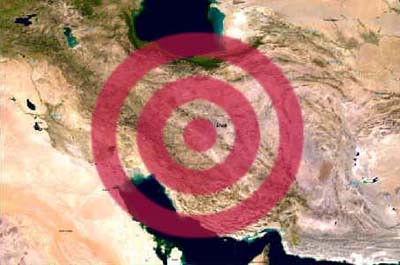
Target Iran

Seymour Hersh writes an interesting article (having read it in full but I will) in the New Yorker on certain groups within the Pentagon who are planning to attack Iran and want to attack Iran. Here's a short excerpt:
To undermine Iran, which is predominantly Shiite, the Bush Administration has decided, in effect, to reconfigure its priorities in the Middle East. In Lebanon, the Administration has coƶperated with Saudi Arabia’s government, which is Sunni, in clandestine operations that are intended to weaken Hezbollah, the Shiite organization that is backed by Iran. The U.S. has also taken part in clandestine operations aimed at Iran and its ally Syria. A by-product of these activities has been the bolstering of Sunni extremist groups that espouse a militant vision of Islam and are hostile to America and sympathetic to Al Qaeda.

One contradictory aspect of the new strategy is that, in Iraq, most of the insurgent violence directed at the American military has come from Sunni forces, and not from Shiites. But, from the Administration’s perspective, the most profound—and unintended—strategic consequence of the Iraq war is the empowerment of Iran. Its President, Mahmoud Ahmadinejad, has made defiant pronouncements about the destruction of Israel and his country’s right to pursue its nuclear program, and last week its supreme religious leader, Ayatollah Ali Khamenei, said on state television that “realities in the region show that the arrogant front, headed by the U.S. and its allies, will be the principal loser in the region.”

Image From:
Fly Over Guy

12.06.2006

News Analysis: The Iraq Study Group and the War


The Iraq Study Group released a report that many annalists predicted they would release. An almost complete (but not overly stinging) report on the way the Bush Administration has handled the Iraq War and how it should change course. I myself am working on my own blog series on the Iraq War and will continue to write the series, right now I’m writing part III of a ten part series and have already written parts I and II. The analysis of this bipartisan commission was relatively spot on. Before the war started I would argue with people that almost no matter what would happen we would be stuck in Iraq for years because all occupations tend to fall by the way side naturally. History has shown this numerous times, especially with Algeria and Vietnam. This is the Reason why Bush 41, George Herbert Walker Bush, decided to not invade Baghdad during the First Gulf War, he even wrote in his memoirs that it would have lead to a disaster and that American troops would still be in the country to this day (he wrote that piece around 1997 or so). Essentially we find ourselves where we were in 1970 in Vietnam. Earlier war opponents, such as Senator Mansfield, argued to pull troops out of the country, but people like him were meet with criticism and called “soft on communism” and that we couldn’t leave “until the job was done.” For this war people like Rep. Murtha have called for immediate troop withdrawals and were criticized and called “soft on terrorism” and that we wouldn’t leave “until the job was done.” And yet when we look at history we did end up withdrawing from Vietnam and the French did end up withdrawing from Algiers and the reason why some many lives were lost was because nobody had the courage to withdraw the troops earlier when it would have made more sense too. Now we have a report essentially telling us the same thing, to withdraw, because the situation is so dire that, as one of the head chairmen said, it might not ever be fixed. Now Bush and Blair, after years of stating the same thing over and over, are finally willing to “change course” despite the seemingly contradictory change in their rhetoric and for criticizing their opponents for saying the same thing.

North America:

Christian Science Monitor (U.S.)
Dec. 7, 2006
Iraq Study Group: Shift Mission, Go Regional
By Howard LaFranchi


Amid signs of deepening difficulty and waning American influence in Iraq, the congressionally mandated Iraq Study Group unveiled a set of recommendations Wednesday ranging from a broader regional diplomatic effort to more emphasis on training Iraqi security forces.

The report - available online and as a 160-page book in bookstores - avoids some controversial proposals. This reflects the panel's bipartisan makeup as well as a desire not to be dismissed by the White House out of hand. But it does call for increased pressure on the Iraqi government to make progress in key areas of reconciliation and governability - and to withdraw US support if progress is not made...(Read More)

New York Times
Dec. 6, 2006
Panel Calls for New Approach to Iraq
By David E. Sanger


WASHINGTON, Dec. 6 — A bipartisan commission warned on Wednesday that “the situation in Iraq is grave and deteriorating,” and handed President Bush both a rebuke of his current strategy and a detailed blueprint for a fundamentally different approach, including the pullback of all American combat brigades over the next 15 months.

In unusually sweeping and blunt language, the panel of 10 Republicans and Democrats issued 79 specific recommendations, including a call for direct negotiations with Syria and Iran and a clear declaration that the United States would reduce its support to Iraq unless that weak and divided government makes “substantial progress” on reconciliation and security in coming months...(Read More)

Washington Post
Dec. 6, 2006
Conditions in Iraq "Deteriorating," Panel Says
By William Branigin, Josh White, and Robin Wright

Faced with what it described as "deteriorating" conditions in Iraq and the prospect that a "slide toward chaos" could topple the Baghdad government, a bipartisan panel urged President Bush today to fundamentally change the U.S. military mission in Iraq and launch a new diplomatic effort involving the country's neighbors, including Iran and Syria.

In a long-awaited report presented to Bush and Congress, the Iraq Study Group warned that "current U.S. policy is not working," and it recommended shifting the basic U.S. military mission in Iraq from combat to training...(Read More)

The Toronto Star
Dec. 7, 2006
Iraq Report Offers Exit Strategy
By Tim Harper


WASHINGTON—A blue ribbon panel has handed U.S. President George W. Bush a grim assessment of his failed Iraq war, calling the situation "grave and deteriorating" but offering him a lifeline to avert catastrophe.

The Iraq Study Group, headed by former U.S. secretary of state James Baker and onetime 9/11 co-chair Lee Hamilton, makes no mention of potential victory in Iraq, serves up no bromides about exporting democracy to the region and makes no promises the situation will not devolve into total chaos...(Read More)

Middle East:

Haaretz (Israel)
Dec. 7, 2006
Syrian FM: No solution to Iraq's problems without Iran and Syria
By Haaretz Service and News Agencies

Syria welcomed the Iraq Study Group report on Thursday, praising its emphasis on the need to settle the Arab-Israeli conflict and reiterating that Syria's priority is to regain the Israeli-occupied Golan Heights.

The comments by an unidentified Syrian Foreign Ministry official contrasted sharply with Prime Minister Ehud Olmert's earlier remark that Israel rejected the report's linkage of the Arab-Israeli dispute with the conflict in Iraq. Olmert also rejected the report's recommendation that Israel revive negotiations with Syria...(Read More)

Daily Star (Lebanon)
Dec. 7, 2006
Iraq Report Gives Bush a Last Chance to Salvage His Reputation
Editorial

The long-awaited report of Washington's Iraq Study Group is now in the public domain, and while it offers no surefire remedies, it does represent an opportunity to cure the severe case of denial from which US President George W. Bush's administration has been suffering. The report amounts to a comprehensive indictment of American strategy in Iraq and recommends a series of changes, including a few that directly contradict some of the White House's most dearly held convictions. It is clear, however, that Washington's approaches to Iraq and the broader Middle East have been a colossal and costly failure. The best course to take is by no means obvious, but the need to abandon the current one is precisely that...(Read More)

Al Jazeera (Qatar)
Dec. 7, 2006
Mixed Reaction to Iraq Report


Syria's vice-president has said that his country and its ally, Iran, are prepared to help stabilise Iraq.

"The two countries are Iraq's neighbours, and without getting them involved it will not be easy to find a solution to the predicament in Iraq," Farouq al-Sharaa told a political conference in Damascus on Wednesday...(Read More)

South Asia:

Times of India
Dec. 7, 2006
US Underreported Iraq Violence

WASHINGTON: US military and intelligence officials have systematically underreported the violence in Iraq in order to suit the Bush administration's policy goals, the bipartisan Iraq Study Group said.

In its report on ways to improve the US approach to stabilizing Iraq, the group recommended Wednesday that the director of national intelligence and the secretary of defence make changes in the collection of data about violence to provide a more accurate picture...(Read More)

The Daily Star (Bangladesh)
Dec. 8, 2006
Iran Cautions Over US Report Seeking Engagement
By Reuters

Iran has responded cautiously to proposals for the United States to engage its foe directly, as analysts say Tehran waits to see whether President George W Bush embraces the idea and what concessions it can win.

The US bipartisan Iraq Study Group called on Wednesday for a new diplomatic push by Washington, including urging the United States to deal directly with Iraq's neighbours, Iran and Syria...(Read More)

Dawn (Pakistan)
Dec. 7, 2006
Withdrawal of US Troops in 15 Months Urged: Iraq Study Group Presents Report
By Anwar Iqbal

WASHINGTON, Dec 6: The long-awaited Iraq Study Group report, delivered to President George Bush on Wednesday morning, urges the US administration to withdraw all combat troops from Iraq by the first quarter of 2008.

The 142-page report also urges the Bush administration to engage Iran and Syria in its pursuit for a peaceful solution to the Iraqi crisis...(Read More)

Latin America:

Buenos Aires Herald
Dec. 7, 2006
Change Iraq Policy Now

After more than three years, 2,900 US soldiers killed and 400 billion dollars spent, the United States is confronting a ‘‘grave and deteriorating’’ situation in Iraq, where victory cannot be assured and even greater bloodshed is possible, a bipartisan group of seasoned trouble-shooters reported yesterday.

The US military should speed up training for Iraqi security forces to enable withdrawal of up to 75,000 offensive US combat troops within 16 months, the Iraq Study Group told US President George W. Bush in a sweeping and scathing indictment of his ‘‘stay the course’’ strategy.
The panel led by former secretary of state James A. Baker III and former House International Relations Committee chairman Lee Hamilton, D-Ind., told Bush that his 45-month-old campaign in Iraq relying on 140,000 US troops was ‘‘not working’’ and required ‘‘a new way forward.’’...(Read More)

Eastern Africa:

Daily Naiton (Kenya)
Dec. 7, 2006
Panel Urges Bush to Begin Pullout
By Reuters

The Iraq Study Group today recommended that US forces begin to withdraw from combat in Iraq and called for a new diplomatic and political push to improve a "grave and deteriorating" situation.

US President George W. Bush said he would take the report "very seriously" after meeting with the bipartisan group, but the White House has made clear he will not be bound by its conclusions and has begun its own review of Iraq policy...(Read More)

Southern Africa:

Mail & Guardian (South Africa)
Dec. 7, 2006
Bush Told: Alter Iraq Policy or Risk Disaster

United States President George Bush was warned on Wednesday that his policy in Iraq was "not working" and that to have a chance of avoiding a regional disaster he would have to repudiate much of the foreign policy he has pursued over the past six years.

In stark language, the long awaited bipartisan Iraq Study Group (ISG) called for US combat troops to be withdrawn by early 2008 in parallel with comprehensive Middle East peace negotiations that would include talks with Iran and Syria on Iraq's future, a conference on the Israeli-Palestinian conflict and a land-for-peace deal between Israel and Syria...(Read More)

Europe:

The Guardian (U.K.)
Dec. 8, 2006
Bush-Blair Split Over Report’s Key Proposals
By Julian Borger

George Bush yesterday rejected key recommendations made by the Iraq Study Group, revealing important differences with Tony Blair, who embraced the proposals put forward by the US bipartisan commission.

Those differences became clear after the two leaders met at the White House.

President Bush flatly contradicted the ISG's proposal that Iran and Syria be included in regional talks aimed at ending Iraq's worsening civil war. He restated the White House position that talks with Tehran were conditional on the Iranians stopping uranium enrichment, while contacts with Damascus would depend on an end to Syrian destabilisation of Lebanon and a cessation of arms and money flows over the border to Iraqi insurgents...(Read More)

International Herald Tribune (France)
Dec. 7, 2006
Bush Resists Idea of Troop Withdrawl
By Brian Knowlton

WASHINGTON: President George W. Bush and Prime Minister Tony Blair on Thursday welcomed the Baker- Hamilton report on Iraq, with its notion of a concerted new push for Middle East peace, but the president distanced himself from the ideas of a quick troop withdrawal or of holding talks with Iran or Syria unless they changed their behavior.

At an hourlong news conference with his closest ally in the Iraq war, Bush cut short a reporter when his question suggested that the president did not realize how serious the situation in Iraq had become...(Read More)

Southeast Asia:

Philippine Daily Inquirer
Dec. 8, 2006
Iraq Study Group Finds Bush War Policies Wrong

WASHINGTON -- President George W. Bush’s war policies have failed in almost every regard, the bipartisan Iraq Study Group concluded, and it warned of dwindling chances to change course before crisis turns to chaos.

Nearly four years and $400 billion into a deeply unpopular war that has killed tens of thousands of Iraqis and more than 2,900 Americans, violence is bad and getting worse, success is not guaranteed, and the consequences of failure are great, the panel of five Republicans and five Democrats said in a bleak accounting of US and Iraqi shortcomings...(Read More)


Image From:

New York Times

11.09.2006

Rumsfeld Resigns

After the Democrats swept the House by an overwhelming majority and took control of the Senate (49 Democrats plus 2 independents who will caucus with them) Secretary of Defense Donal H. Rumsfeld resigned. His resignation I believe has much to do with the Democratic victory, the Army Times editorial calling for his resignation, and increasing pressure from the military within the Pentagon and from retried generals without, plus the immense hatred towards him by many within the armed forces of the United States. How this will effect the policy in Iraq and the so called "War on Terror" is beyond me, most likely it won't effect much in the long term scheme of things. Below is an article from the New York Times, the editorial from the Army Times, and links to other articles from around the world on Rumsfeld's resignation.

The New York Times
News Analysis
Nov. 9, 2006
By Michael R. Gordon

WASHINGTON, Nov. 8 — From the day he took control at the Pentagon, Donald H. Rumsfeld was determined to reassert civilian control of the defense establishment and create a leaner, more lethal American military.

With President Bush’s endorsement, he pursued his goals with a vengeance, emerging as the most powerful secretary of defense since Robert S. McNamara more than three decades earlier.

Like his predecessor, Mr. Rumsfeld was undone by policies that resulted in a quagmire in a distant land. The defense secretary’s resistance to deploying a large number of troops in Iraq, his skepticism of nation-building and his reluctance to acknowledge a potent insurgency made an already challenging situation all the more difficult. As the turmoil grew in Iraq, the defense secretary who once described himself as “genetically impatient” and a force for change was slow to adapt.

“The ironic thing is that he may end up being criticized for not being more on top of Iraq,” said Eliot A. Cohen, a military historian and professor at the Paul H. Nitze School of Advanced International Studies of Johns Hopkins University. “Blame needs to be shared all around on Iraq, but he bears his share of responsibility by not being willing to make the kinds of corrections early on that were necessary.”

Mr. Rumsfeld did not acknowledge missteps on Iraq in his appearance with President Bush on Wednesday, but obliquely accepted that he had become a lightning rod for criticism of the war. Paraphrasing Winston Churchill, he said, “I have benefited greatly from criticism, and at no time have I suffered a lack thereof.”

Mr. Rumsfeld came to the Pentagon as a consummate insider. Among an array of important government posts, he had been defense secretary under President Ford, developing a reputation as a ruthlessly effective bureaucratic infighter.

After a career as a corporate chief executive, he returned to the Pentagon after George W. Bush was elected president. Mr. Bush had vowed during his campaign to appoint a powerful defense secretary with a mandate to overhaul the American military. Mr. Rumsfeld was to be that man.

At the Pentagon, Mr. Rumsfeld’s program was called “transformation,” and it acquired the status of an official ideology. Mr. Rumsfeld was enamored of missile defense and space-based systems, issues he had worked on during his years out of office. Like many conservatives, he was wary about the Army leadership, which he considered to be too wedded to heavy forces and too slow to change.

In his trademark blunt style, Mr. Rumsfeld convened a Pentagon “town hall” meeting on Sept. 10, 2001. “The topic today is an adversary that poses a threat, a serious threat, to the security of the United States of America,” he pronounced. “It’s the Pentagon bureaucracy.”

After the terror attacks in Washington and New York the next day, Mr. Rumsfeld focused on the new war on terrorism. The defense secretary was a solid ally of Vice President Dick Cheney, who worked for Mr. Rumsfeld during the Nixon and Ford years. And he soon emerged as a spokesman for the administration’s national security policies, presiding over news conferences at which he issued pithy observations about the need to be prepared for the “unknown unknowns.”

Within the military establishment, however, the defense secretary quickly became a contentious figure as his penchant for hands-on management and his theories on military transformation were given a field test. Mr. Rumsfeld did not decide how many troops would be deployed for the war in Iraq, but he helped pick the generals who did. He never hesitated to push, prod and ask questions to shape their recommendations.

It was Mr. Rumsfeld who complained that the plan for invading and securing Iraq that had been left behind by Gen. Anthony C. Zinni, Tommy Franks’s predecessor at the United States Central Command, called for more troops. As many as 500,000 troops would be sent to secure Iraq. Mr. Rumsfeld dismissed it as old thinking, according to retired Lt. Gen. Greg Newbold.

According to General Franks, Mr. Rumsfeld was the impetus behind one of the most contentious decisions of the war: canceling the deployment of the First Cavalry Division, which was to reinforce the initial invasion force. That left the American military with fewer troops as the insurgency was beginning to develop.

It was also Mr. Rumsfeld who insisted that the Pentagon take the lead in overseeing postwar planning and the administration of Iraq in the first critical months of the occupation after the ouster of Saddam Hussein from power. When Baghdad was gripped by looting in April 2003, the defense secretary dismissed the disorder as little more than the pent-up frustrations of an oppressed people: “Stuff happens.”

According to L. Paul Bremer III, the American civilian administrator in Iraq, and his aides, Mr. Rumsfeld was consulted on the controversial decision to formally disband the Iraqi Army.

Iraq, of course, is just part of Mr. Rumsfeld’s legacy. In terms of his management style, he clearly succeeded in consolidating his authority as defense secretary. More than any of his predecessors, Mr. Rumsfeld influenced the appointment of three- and four-star officers, installing military leaders whom he could count on to carry out his agenda. But senior officers complained that his insistence on loyalty came at a cost: a dearth of senior officers willing to offer independent advice.

In terms of his transformation agenda, Mr. Rumsfeld enjoyed, at best, mixed success. He overhauled the cold-war-era system of military bases around the world, a decision that has led to the reduction in American forces in Europe and Korea. He also insisted on greater cooperation among the military services.

“On the positive side he brought the armed forces to a much higher degree of joint thinking and integration,” said Barry M. Blechman, a member of the Defense Policy Board, which advises Mr. Rumsfeld, and the president of DFI International, a consulting firm.

Still, despite Mr. Rumsfeld’s avowed intention to challenge orthodox Pentagon thinking, few major weapons programs were canceled and the military’s force structure and spending patterns were not radically altered.

“At the end of the day you would have to say that for Rumsfeld, transformation was more promise than reality,” said Andrew F. Krepinevich Jr., the executive director of the Center for Strategic and Budgetary Assessments. “He made a start, but these things take time, and it is clear now that Iraq has denied him that time.”

Army Times
Editorial
Nov. 4, 2006

“So long as our government requires the backing of an aroused and informed public opinion ... it is necessary to tell the hard bruising truth.”

That statement was written by Pulitzer Prize-winning war correspondent Marguerite Higgins more than a half-century ago during the Korean War.

But until recently, the “hard bruising” truth about the Iraq war has been difficult to come by from leaders in Washington.

One rosy reassurance after another has been handed down by President Bush, Vice President Cheney and Defense Secretary Donald Rumsfeld: “mission accomplished,” the insurgency is “in its last throes,” and “back off,” we know what we’re doing, are a few choice examples.

Military leaders generally toed the line, although a few retired generals eventually spoke out from the safety of the sidelines, inciting criticism equally from anti-war types, who thought they should have spoken out while still in uniform, and pro-war foes, who thought the generals should have kept their critiques behind closed doors.

Now, however, a new chorus of criticism is beginning to resonate. Active-duty military leaders are starting to voice misgivings about the war’s planning, execution and dimming prospects for success.

Army Gen. John Abizaid, chief of U.S. Central Command, told a Senate Armed Services Committee in September: “I believe that the sectarian violence is probably as bad as I’ve seen it ... and that if not stopped, it is possible that Iraq could move towards civil war.”

Last week, someone leaked to The New York Times a Central Command briefing slide showing an assessment that the civil conflict in Iraq now borders on “critical” and has been sliding toward “chaos” for most of the past year. The strategy in Iraq has been to train an Iraqi army and police force that could gradually take over for U.S. troops in providing for the security of their new government and their nation.

But despite the best efforts of American trainers, the problem of molding a viciously sectarian population into anything resembling a force for national unity has become a losing proposition.

For two years, American sergeants, captains and majors training the Iraqis have told their bosses that Iraqi troops have no sense of national identity, are only in it for the money, don’t show up for duty and cannot sustain themselves.

Meanwhile, colonels and generals have asked their bosses for more troops. Service chiefs have asked for more money.

And all along, Rumsfeld has assured us that things are well in hand.

Now, the president says he’ll stick with Rumsfeld for the balance of his term in the White House.

This is a mistake. It is one thing for the majority of Americans to think Rumsfeld has failed. But when the nation’s current military leaders start to break publicly with their defense secretary, then it is clear that he is losing control of the institution he ostensibly leads.

These officers have been loyal public promoters of a war policy many privately feared would fail. They have kept their counsel private, adhering to more than two centuries of American tradition of subordination of the military to civilian authority.

And although that tradition, and the officers’ deep sense of honor, prevent them from saying this publicly, more and more of them believe it.

Rumsfeld has lost credibility with the uniformed leadership, with the troops, with Congress and with the public at large. His strategy has failed, and his ability to lead is compromised. And although the blame for our failures in Iraq rests with the secretary, it will be the troops who bear its brunt.

This is not about the midterm elections. Regardless of which party wins Nov. 7, the time has come, Mr. President, to face the hard bruising truth:

Donald Rumsfeld must go.

Below is the response to the Army Times editorial by the Department of Defense.

United States Department of Defense For The Record Nov. 5, 2006

The editorial included a number of inaccurate and misleading statements.

HERE ARE THE FACTS:

THE ADMINISTRATION HAS PROVIDED A BALANCED PICTURE: Despite what the editorial claims, the Department has always attempted to clearly and accurately describe the challenges our forces face in Iraq and Afghanistan. The Secretary above all has always been very measured in describing the progress U.S forces are making in what will undoubtedly be a long struggle in the War on Terror...(Read More)

Globe and Mail (Canada)
Nov. 9, 2006
By Associated Press

Washington — U.S. Defence Secretary Donald Rumsfeld acknowledged Thursday progress in the Iraq war has not been going “well enough or fast enough” in his first extended remarks since announcing his resignation under political pressure.

Mr. Rumsfeld said little about his impending departure when speaking to a friendly audience of students, teachers and military personnel at Kansas State University...(Read More)

Buenos Aires Herald
Herald Staff with AP and Reuters
Nov. 9, 2006

"Look, this is a close election. If you look at race by race, it was close. The cumulative effect, however, was not too close. It was a thumping," he said.
He quickly announced the resignation of Defence Secretary Donald Rumsfeld, whose removal had long been demanded by Democrats, while insisting the decision for him to leave had been made before Election Day...(Read More)

The Hindu (India)
By Atul Aneja

DUBAI: A large section of Iraqis have welcomed the resignation of U.S. Defence Secretary Donald Rumsfeld, one of the key architects of the war in Iraq.

Mohammed Dayini, a spokesman for the Sunni National Dialogue Council, said Mr. Rumsfeld should have resigned much earlier. "He is the one responsible for the criminal acts at Abu Ghraib and the thousands of innocent Iraqis who have died at the hands of the US," he said...(Read More)

Asahi Shimbun (Japan)
Nov. 10, 2006

Reacting to the sudden resignation of U.S. Secretary of Defense Donald Rumsfeld, Japan made clear Thursday it is committed to assisting in Iraq's reconstruction and implementing the planned U.S. military realignment here.

While Rumsfeld's departure prompted officials in Tokyo to ponder the ramifications, Chief Cabinet Secretary Yasuhisa Shiozaki touched on concerns Thursday over a plan to relocate the functions of Marine Corps Air Station Futenma in Ginowan, Okinawa Prefecture, to Nago in another part of the prefecture...(Read More)

Daily Nation (Kenya)
Nov. 11, 2006
By Reuters

Robert Gates, President Bush’s new nominee as US Secretary of Defence, is no stranger to controversy on Capitol Hill. His last nomination, for CIA chief in 1991, produced a gruelling though ultimately successful confirmation battle.

But some who voted against him before – in part to protest against what they said was his selective memory about past scandal – said yesterday they were willing to consider his qualifications to replace Donald Rumsfeld at the Pentagon...(Read More)

Mail & Guardian (South Africa)
Nov. 8, 2006
By Stephen Collinson

United States Defence Secretary Donald Rumsfeld resigned on Wednesday, paying the price for the Democrat surge to power in Congress driven by a wave of public anger over the Iraq war.

President George Bush announced the veteran power broker's departure, sending shockwaves though Washington, in a move that could possibly pave the way to a major change of US strategy in the strife-torn nation...(Read More)

The Independent (United Kingdom)
Nov. 9, 2006
By Rupert Cornwell

Donald Rumsfeld, the beleaguered US Defence Secretary, resigned yesterday, hours after a sweeping Democratic victory in midterm elections that redraw the balance of political power in Washington and could presage major changes in policy over Iraq.

The electoral defeat had made Mr Rumsfeld's position all but untenable, given the criticism raining upon him not only from the resurgent Democrats but also from senior members of the Republican Party. But its timing was a shock - only days after Mr Bush had vowed to keep the Pentagon chief in place until the end of his term in January 2009...(Read More)

Der Spiegel (Germany)
Nov. 9, 2006
By Matthias Gebauer

Donald Rumsfeld was the oldest and the most controversial member of the Bush administration. Now he's being made a scapegoat for the Iraq disaster and has to go. His mission to radically reorganize the US armed forces has failed. His huge mistakes will continue to haunt Bush.

Donald Rumsfeld liked to cultivate the legend of himself as a tough warrior. On the morning of Sept. 11, 2001 -- a plane had just crashed into the Pentagon -- the defense secretary ignored the warnings of his anxious security advisors and ordered his staff to remain in their offices until the end. He only allowed people to leave when the smoke had become too thick to breathe. The message of this often-told anecdote: The captain is the last to leave the ship...(Read More)

Jerusalem Post
Nov. 9, 2006
By Matthew E. Berger

US Secretary of Defense Donald Rumsfeld resigned Wednesday, a day after an American electorate, frustrated with the progress of the war in Iraq, elected a Democratic leadership in the House of Representatives and at least a half-share of the Senate.

President George W. Bush announced Rumsfeld's resignation at a press conference Wednesday, and said he had asked Robert Gates, the former director of the Central Intelligence Agency, to replace him...(Read More)

Al Jazeera (Qatar)
Nov. 9, 2006
By Al Jazeera and Agencies

Speaking at a White House press conference on Wednesday, George Bush, the president, said Rumsfeld was a patriot who had "served his country with honour and distinction" but recognised that a change was needed at the Pentagon.

"After a series of thoughtful conversations, secretary Rumsfeld and I agreed that the timing is right for new leadership," Bush said...(Read More)

9.25.2006

What Do the Failed Terror Plots in Germany Mean?

By Rorik Strindberg

The views and opinions expressed in this essay do not necessarily reflect those of the creator of this blog and are the sole responsibility of the author. Essays expressing opinions similar to and counter to those of the creator of this blog are strictly for diversity and to start thoughtful and meaningful discussion.


The recent foiled terrorist plot in Germany has redefined the targets for Jihadists. Previously many Germans felt safe, because former Chancellor Gerhard Schroeder's opposition to the Second Iraq War.(1) Statements from Bin Laden like “Why did we not attack Sweden?” made many think that Jihadists opposition to America was only based on disapproval of American Foreign Policy. The Germans and other European nations could tell themselves that if they did not bother the Muslim states, their would be no terrorism. One must remember that the only European Nations that experienced Post-September 11th terrorism attacks were Spain and England, both of whom participates in the Second Iraq War.

This thought is somewhat foolish, considering that the United States was not in Iraq or Afghanistan during September 11th.(2) Also, prior to September 11th the Middle East had not become any more of an important region in US foreign policy thinking since the Carter Doctrine, and less important since Presidents Carter and Reagan supported the Anti-Communist forces in Afghanistan, Northern Alliance and Mujahadine.(3) Sometimes one dose not have the option of supporting ideological allies.(4)

What are the reasons for the thwarted terrorist attacks in Germany? This is a question that one must ask. They don’t fit any of the “Legitimate” reasons for terrorist attacks on a Nation. Germans did not participate in the Second Iraq War. Germans were not in the Middle East, supposedly propping up illegitimate regimes. They did republish the Danish Cartoons that showed the profit Mohamed with a bomb on his head. Clearly an insensitive act, but how dose this justify killing individuals that had nothing to do with the publication? And why not attack Denmark, the Nation where the Cartoons were first published? Attacking Denmark would send a very clear message that more insensitive cartoons would cause terrorism.

One Good answer would be that the Jihadists are fractured. The implementation of policies like the monitoring of known terrorist cell phones and robbing Jihadists of a save haven like Afghanistan, must make communication between Jihadists almost impossible and very slow. A “Foreign Policy” cannot be conducted by one man, like Bin Laden. This has caused splinter groups that tend to be more extreme, like Abu Musab al-Zarqawi, who through their brutal tactics have hurt their cause. Note, Bin Laden’s messages to Zarqawi to stop be-headings, because they hurt the cause. Also the Bombings in Jordan that killed one couple that was going to get married could not have helped. Is the German case an other splinter cell, the answer is almost definitely. Either the terrorists were disgruntled Muslim-Germans or Muslims not under the authority of Bin Laden. Either way the Jihadists were opposed to Western values/society and that is the motivation for their belligerence.

Having splinter cells will not allow the Jihadists to conduct a forgien policy. Having Al-Qaeda direct all of the attacks could send a simple message to the world. Don’t cooperate with America, and we won’t bother you. This would cause a greater rift in the Trans-Atlantic Alliance, and make European publics to have greater support for opposing American Policy. Now, Europeans are more likely to see this as a War from Jiahdists on Western values. It is hard to imagine even the people who most adamantly support passiveism, to curtail their own hard fought freedoms to appease Jihadists.

Notes

1. This is true but the Germans participated in the Second Iraq War in a very behind the since manner. Including using German Navy vessels to patrol the sea lanes that the Americans were prier to the War, and dispatching HASMAT teams to Kuwait.

2. It is hard to argue that the post-bellum containment of the Secular and Belligerent Iraq would offend Jihadist, because Saddam represented the type of governments that Jihadists desired to over through.

3. The First Gulf War conflict or Desert Shield/Desert Storm is an action committed in the spirit of the Carter Doctrine.

4. This policy was necessary to prove to the USSR that an other war would bankrupt the nation that consistently spent around 15% of its GDP on their military, to put this in to perspective the United States today spends about 4% of its GDP on the military. And to end the madness of MAD or mutual assured destruction.